How to Be Organized at Home: A Practical 2026 Guide
Learn how to be organised at home with quick wins, daily routines and shared systems. A practical guide to far less household stress that finally sticks.
Productivity & PlanningThe short version: to get organised at home, start with one 15-minute quick win on a clutter hotspot you see every day, then build two repeatable routines (a daily tidy and a weekly reset), and finally move shared jobs, shopping and the calendar into one place everyone in the house can see. You don't need a perfect home or a free weekend. You need small, consistent actions and systems that hold up when life gets messy.
Most homes don't fall into chaos overnight. It happens gradually: the mail stacks up, the junk drawer stops closing, and suddenly every surface is buried. Getting organised again doesn't require a weekend-long overhaul, and this guide walks through the exact order to do it in, from your first 15 minutes to systems your whole household can keep up with. If you share your home, see how everyone keeps to one system on the OneHaus for shared households page.
Laying the Foundation for an Organised Home
The paralysis usually comes from feeling like the job is too big to even start. Grand plans to sort the entire house tend to fail because they're too vague and demanding. Instead of trying to climb the whole mountain at once, find a single, small foothold: the "quick win."
Score an Instant Victory with Quick Wins
A quick win is a small, high-impact task you can complete in under 15 minutes. It's designed to give you an immediate, visible result that creates a sense of accomplishment and fuels you to do more. Don't even think about the loft or the garage. Just focus on one "clutter hotspot" you see every single day.
To get started, we've put together a few simple, high-impact tasks you can tackle today. Each one delivers a tangible result in minutes, proving that you can make a difference right away.
Quick Wins for Instant Organization
| Task | Time Estimate | Impact on Your Home |
|---|---|---|
| Clear one counter | 10 mins | Creates a calm, usable surface in a high-traffic area. |
| Sort the mail pile | 5 mins | Instantly eliminates visual clutter and surfaces urgent actions. |
| Tidy the entryway | 10 mins | Makes coming home feel less chaotic and stressful. |
| Declutter your bedside table | 5 mins | Promotes a more restful and calming bedroom environment. |
| Wipe down one appliance | 5 mins | A small clean that makes the whole kitchen feel a bit brighter. |
Completing just one of these tasks breaks the cycle of inaction. It provides a small psychological boost every time you see that newly cleared space, which is exactly the momentum you need.
You don't need perfection. You just need proof that you can make a visible difference in a short amount of time.
Establish a Household Command Centre
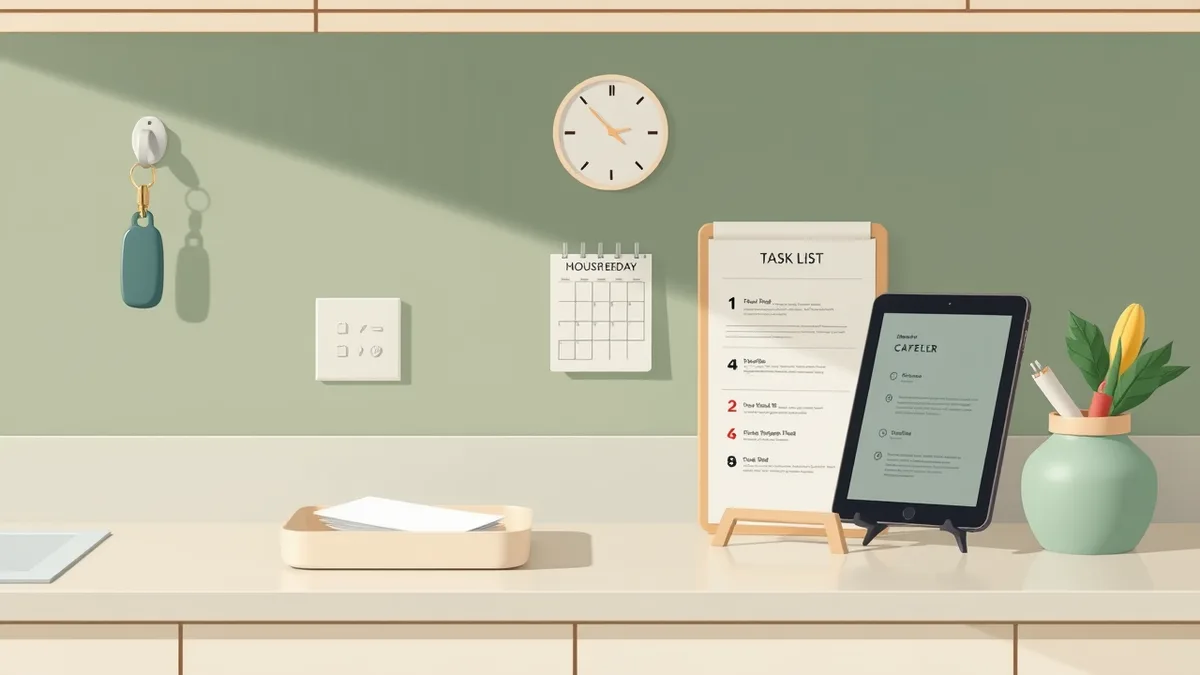
Once you've cleared a small space, the next challenge is stopping it from immediately reverting to its cluttered state. The solution is to create a household command centre.
This doesn't need to be some elaborate setup. It's a designated spot where essential daily items live. Think of it as a permanent home for things that are constantly in transit.
Your command centre could be a small section of your kitchen worktop, a specific shelf in the entryway, or even a magnetic board on the side of the fridge. The key is consistency. Everyone in the household needs to know this is the go-to spot for keys, outgoing mail, shopping lists, and appointment reminders.
This simple system stops clutter before it can even start. By giving every "in-transit" item a proper home, you eliminate the daily "Where are my keys?" panic and build a solid foundation for a more organised life.
Two Tiny Rules That Do the Heavy Lifting
Once items have homes, two habits keep them there with almost no effort:
- The two-minute rule: if a task takes less than two minutes (hanging up a coat, rinsing a mug, replying to a one-line message), do it now rather than letting it stack up. Most household clutter is a pile of two-minute jobs nobody did.
- Never leave a room empty-handed: when you move between rooms, grab one thing that belongs where you're heading and put it away on the way. Over a day this quietly resets the house without a single dedicated tidying session.
Neither rule needs a chart or an app. They work because they remove the decision: you already know where the thing lives, so you just move it.
Building Your Household Operating System
An organised home doesn't run on willpower. It runs on reliable systems. Once you've scored a few quick wins by decluttering, the next step is building a basic 'operating system' for your household: a small set of routines that stop tasks from piling up into a mountain of stress. Predictable routines quietly replace the reactive scramble, so you stop firefighting the same problems every week.
Clearing a single cluttered area first gives you the space and momentum to build something more permanent, like the central command centre above.
The Power of Daily and Weekly Routines
At the heart of any good household system are a few simple, repeatable routines. These aren't about massive deep-cleaning projects. They're about small, consistent actions that keep chaos from creeping back in. Two of the most effective are the 15-Minute Daily Tidy and the Weekly Reset Hour.
The 15-Minute Daily Tidy is exactly what it sounds like: a short, non-negotiable block of time every evening to return the main living areas to a neutral state.
- Put away whatever's been left on the coffee table.
- Wipe down the kitchen worktops.
- Load the last few dishes into the dishwasher.
- Plump up the sofa cushions.
This quick burst of activity pays off more than you'd expect. You wake up to a tidy space, which cuts down on morning stress and sets a much better tone for the day.
The Weekly Reset Hour is a slightly longer session, usually on a Sunday, to plan and prepare for the week ahead. It's your chance to get in front of the curve.
- Check the calendar for any upcoming appointments.
- Plan a few simple meals for the week.
- Check you're not about to run out of essentials like toilet paper or bin bags.
- Have a quick chat with your partner or family about the week's schedule.
One hour of planning on a Sunday can save you from countless moments of stress and last-minute scrambling during the week.
Create Systems for Recurring Responsibilities
With daily and weekly routines in place, you can start building specific systems for all those recurring tasks. Most household jobs are predictable. The bins go out on the same day, bills are due around the same time, and the dishwasher seems to need emptying every single day. Get these responsibilities out of your head and into a system you can trust.
Forgetting to take the recycling out is a system failure, not a personal one. Instead of relying on your own memory, externalise the task. A shared digital calendar with recurring reminders is perfect for this.
Examples of Systemised Tasks:
- Bin Day: Set a recurring reminder for the evening before collection.
- Bill Payments: Schedule alerts a few days before each one is due.
- Monthly Subscription Reviews: Create a task to check for services you no longer need.
- Pet Medication: Add a repeating event to your calendar so it's never missed.
For couples and families, shared tools become indispensable here. Assigning ownership and setting clear deadlines in a shared app creates transparency and accountability. Everyone can see what needs doing without having to ask. You can learn more about sharing the load by exploring our guide to household management. Done well, this turns household admin from a source of conflict into a collaborative effort.
Mastering Shared Tasks and Shopping Lists

Getting yourself organised is one thing. Trying to coordinate with a partner, flatmates, or the whole family? That's where things usually fall apart. Your personal system might be flawless, but the moment you have to share responsibilities, forgotten groceries, arguments over whose turn it is, and the constant mental load of tracking it all start to pile up.
Most household friction starts here. Simple, transparent systems that everyone can see and use are what fix it. When the what, when, and who of household jobs are clear, the nagging stops and chaotic guesswork turns into actual teamwork.
Hold a Household Kickoff Meeting
Before you start building systems, you need to get on the same page. A household kickoff meeting sounds formal, but it's really just a quick, informal chat to agree on how you'll work together. Nobody's getting a performance review. You're just making home life smoother for everyone.
During the chat, you'll want to:
- List all shared jobs: Brainstorm everything that keeps the house running. Think taking out the bins, cleaning the bathroom, planning meals, and doing the weekly shop. You might be surprised how long the list gets.
- Talk about what's fair: How should the work be split? It doesn't have to be a perfect 50/50 split on every single task, but the overall workload should feel balanced and equitable.
- Agree on standards: What does "clean" actually mean? Agreeing on a baseline (like "worktops are wiped down every night") prevents a lot of future arguments.
This one conversation sets the tone. It makes clear that keeping the house in order is shared work, and no one person should carry it alone.
Create a Bulletproof Shared Shopping List
If there's one thing that sinks a household's efficiency, it's shopping. Forgetting milk means an extra trip to the shops. Buying a second jar of jam because nobody knew you already had one wastes money and adds clutter.
A shared digital list is the single best way to fix this. Everyone adds to one list, so nothing gets bought twice or forgotten. The moment someone uses the last teabag, they can add it to the list right there and then.
A live, shared shopping list kills the last-minute "Need anything from the shop?" texts. Whoever does the shopping already has a complete, up-to-the-minute list of exactly what's needed.
For an extra layer of efficiency, organise your lists by shop. It's a simple trick that makes shopping trips much faster. Your shared lists might look something like this:
- Grocery Store: Milk, bread, chicken, pasta, onions.
- Hardware Store: Lightbulbs, picture hooks, batteries.
- Chemist: Toothpaste, plasters, shampoo.
This way, anyone can add an item to the right list on the fly. When it's time to go shopping, you've already got a sorted plan for each stop. We've put together a full guide on creating a shared shopping list system for your family if you want the details.
Sync Your Schedules and Finances
A truly organised household runs on more than just chore lists. You also need to sync calendars and keep track of shared spending. Clashing appointments and confusion over who paid for the takeaway create tension you just don't need.
A shared digital calendar is the best defence against scheduling conflicts. Put everything in: dentist appointments, kids' football practice, social plans. That visibility lets everyone plan their own lives while knowing what household commitments are coming up.
For shared expenses, keep it simple. Whether you use a dedicated app or a shared note, the goal is just to make it transparent.
Simple Expense Tracking:
- Create a shared space: A spreadsheet, a notes app, or a purpose-built tool will do the job.
- Log expenses as they happen: When someone buys a shared item (like groceries or cleaning supplies), they add the item and the cost to the list.
- Settle up regularly: At the end of the week or month, just tally it up and sort out the balance.
These simple, shared systems are the foundation of a well-run home. They reduce misunderstandings, spread the mental load, and build a real sense of shared ownership.
Overcoming Common Roadblocks to Organisation
Even the best-laid plans can fall apart when real life intervenes. You can design the perfect system, but it will get tested by the inevitable problems that threaten to derail your hard work.
Life is messy. Motivation comes and goes, you get tired, and a single unexpected event can throw your entire week into chaos. You can't prevent any of that, so the goal is a system flexible enough to bend without breaking when it happens.
Tackling Household Presenteeism
One of the biggest, yet rarely discussed, hurdles is something you might call "household presenteeism". This is when someone is physically at home but is too stressed, exhausted, or ill to actually contribute. Their share of the work goes undone, and the whole system starts to creak under the strain, often leading to resentment.
And it's a growing problem, not just a passing feeling. The UK is facing a productivity crisis that extends right into our homes, made worse by health-related presenteeism. Over the last 10 years, lost productivity has doubled, with two-thirds of that increase linked to rising mental ill-health. With The Health Foundation predicting that over nine million people in the UK will be living with a major illness by 2040, the pressure on household management is only going to grow. You can read more about these vital UK productivity findings.
When someone is unwell or just overwhelmed, your shared lists and calendars become a crucial safety net. Anyone else in the household can see what needs doing at a glance and step in to help, without needing a stressful, last-minute conversation. It creates a buffer that allows for the simple fact that we're all human.
Solving the "I Can't Find Anything" Problem
Everyone's heard it. Everyone's said it. "I can't find anything!" almost always means things don't have a designated, permanent home. You might have spent an hour "tidying," but if all you did was shove things into the nearest cupboard, you've only hidden the problem, not solved it.
The solution? Labelling. You don't need a fancy machine. A marker pen and some masking tape work just fine.
A Few Simple Labelling Wins:
- Storage Boxes: Label those boxes in the loft or garage with their contents (e.g., "Christmas Decorations," "Kids' Summer Clothes"). You will thank yourself profusely later.
- Kitchen Cupboards: Use labels to mark shelves for categories like "Baking," "Tins," or "Pasta & Grains." It makes finding ingredients and putting the shopping away so much faster.
- Important Paperwork: Clearly label files for documents like "Car Insurance," "Household Bills," and "Appliance Manuals."
Labelling reduces the mental effort it takes to find something and, just as importantly, to put it away in the right place. It's not about showroom aesthetics.
Stopping Paper Before It Piles Up
Paper is the clutter most homes never quite get on top of. It arrives every day, it never has an obvious home, and it breeds on flat surfaces. Two habits keep it under control:
- Sort post the second it lands. Stand by the recycling bin and split each piece into one of three piles: act on it, file it, or bin it. Junk never makes it past the doormat, and the "act on it" pile becomes a short list rather than a mystery stack.
- Go paperless where you can. Switch bank statements, bills and subscriptions to digital, and unsubscribe from catalogues. Less paper coming in means less paper to manage, full stop.
Buying Less Clutter in the First Place
Organising is far easier when less stuff comes through the door. Two simple guardrails help:
- Pause before you buy. For non-essentials, wait a day before purchasing. A surprising amount of "I need this" turns into "I forgot about it" overnight, and that is clutter you never have to store, clean or eventually declutter.
- Keep a donation station going. A box or bag in a cupboard or by the door, ready for anything you've finished with. When it's full, it goes. A standing exit route stops items lingering "until I get round to it".
Taming Digital Clutter
Clutter doesn't stop at physical stuff. A desktop littered with random files, an inbox with thousands of unread emails, and a phone screen packed with forgotten apps all feed that same feeling of being overwhelmed and disorganised.
Digital mess drains your focus just as surely as a messy room does. A few minutes of digital tidying can do a lot for your mental clarity.
Quick Tips for a Digital Tidy-Up:
- Create a Simple Folder System: On your computer, start with broad folders like "Work," "Personal," and "Finances." You can always create more specific sub-folders inside them as you go.
- Unsubscribe Aggressively: Set a timer for 10 minutes and go through your inbox, unsubscribing from every promotional email and newsletter you never actually read.
- Clean Your Phone's Home Screen: Get ruthless. Delete any apps you haven't used in months and group what's left into logical folders like "Social," "Utilities," or "Health."
Anticipating these roadblocks, from human unpredictability to the digital mess, helps you build a system that holds up under pressure. An organised home isn't one where problems never happen. It's one that has a plan for when they do.
Sustaining Your New Systems for the Long Term

Decluttering is done. Routines are built. Shared systems are in place. Getting organised is a project, but staying organised is a whole different game, and in many ways the harder one.
That initial surge of motivation to get everything in order is great, but it fades. The answer is making your new organisational habits so automatic you barely have to think about them.
Build Habits That Actually Stick
One of the best ways to wire in a new routine is through habit stacking. You link a new habit you want to form with an existing one you already do without fail. Your current habit becomes the trigger for the new one.
Instead of a vague goal like "tidy the kitchen," you make it specific. For example: "After I switch on the coffee machine, I will spend five minutes wiping down the worktops." The coffee machine is the cue. The action becomes much harder to forget.
A few more examples:
- After I take my shoes off at the door, I will put them on the shoe rack straight away.
- When I finish dinner, I will load my plate directly into the dishwasher.
- Before I get into bed, I will do a two-minute tidy of my bedside table.
This approach bypasses the need for motivation. The new action just becomes part of a sequence you already perform, helping you stay organised on autopilot.
Long-term organisation comes down to making good habits easier to do than bad ones. Link the new behaviour to something you already do, and the barrier drops to almost nothing.
Celebrate Small Wins to Stay Motivated
It's easy to get discouraged when you're focused on a big end goal that still feels miles away. That's why celebrating small, consistent wins is so crucial. Did you manage the 15-minute daily tidy all week? Acknowledge it. Did you and your partner plan the week's meals without any arguments? That's a huge win.
Marking a win reinforces the behaviour and makes you more likely to repeat it, which is the same reward loop that makes habit tracking and "don't break the chain" streaks work. It builds the momentum you need for the days when you feel tired or uninspired. Learning how to be organised means setting realistic expectations. This is a lifestyle change, not a race. If you're looking for tools to help, you might want to explore the best family organisation apps for 2026 and see how they can support these habits.
Conduct a Regular Weekly Check-In
Your organisational system shouldn't be set in stone. Life changes. Schedules shift, kids' needs evolve, and your priorities move. A weekly check-in is a short, 10-minute meeting with yourself or your household to make sure your system is still fit for purpose.
Use this time to cover three things:
- Review the week ahead: Glance at the calendar. Are there any appointments, deadlines, or school events that need attention?
- Adjust the workload: Is one person feeling buried under chores? Rebalance the tasks for the coming week so the load feels fair.
- Check in on your systems: Is the shared shopping list actually working? Do the routines still feel manageable or have they become a source of stress?
This regular maintenance stops your systems from becoming stale and ignored. It lets you adapt to whatever life throws at you, keeping your home a place of calm. An organisation system should serve you, not the other way around. Be ready to tweak, refine, or even overhaul it when needed.
Common Sticking Points and How to Get Unstuck
Getting organised sounds great in theory, but real life often gets in the way. You start with good intentions, but then run into a problem that stalls all your progress.
Here are some of the most common roadblocks people encounter, and practical ways to get past them without losing momentum.
My Partner and I Have Different Organisation Styles
This comes up all the time. One of you loves a detailed digital plan, while the other needs a physical whiteboard or things stay "out of sight, out of mind." Forcing one person to adopt the other's system is a recipe for failure.
What matters is agreeing on the what, not the how. For example, the shared goal is "the kitchen is clean before bed." How each person remembers their part of that task doesn't really matter.
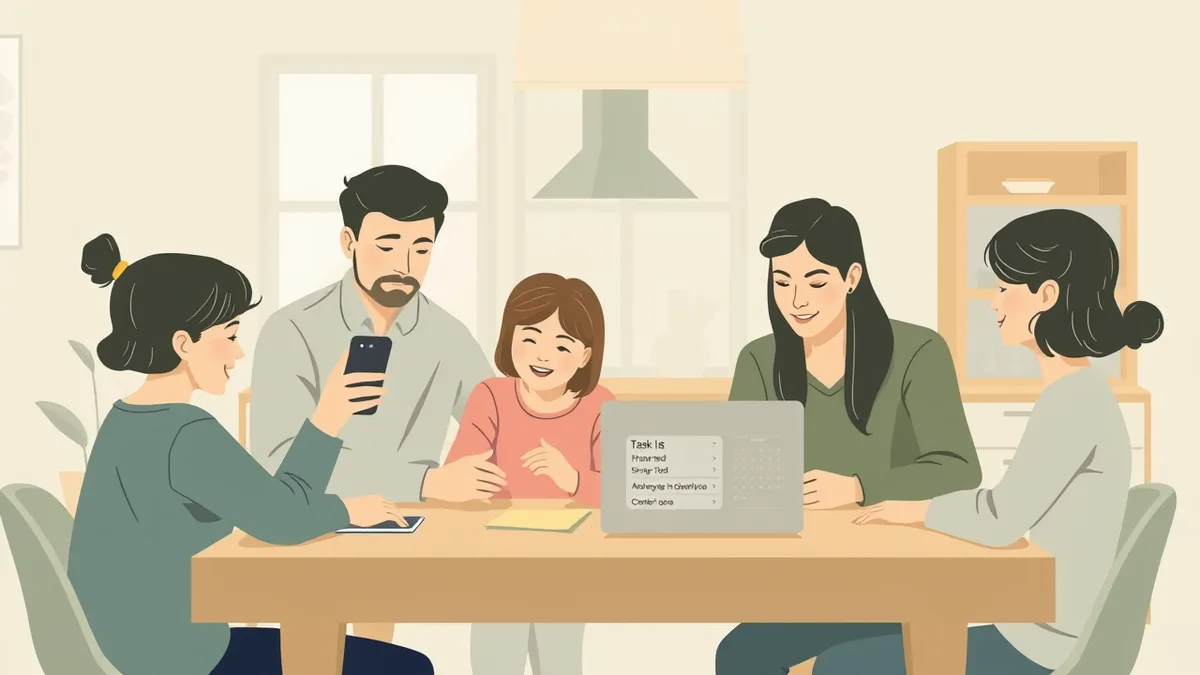
What you do need is a single source of truth: a shared app like OneHaus or a digital calendar where final deadlines and appointments live. The whiteboard user can pull their tasks from there. As long as the bins get taken out on time, who cares how they remembered? It respects individual habits while making sure the household actually runs.
Schedule a quick, low-pressure weekly check-in to see what's working and what isn't. Talking about it stops resentment from building and keeps your shared system from going stale.
I Feel Too Overwhelmed to Even Start
That feeling of paralysis when you look at the mess is a sign your goal is too big. Trying to "organise the whole house" is so massive it guarantees you won't even start.
So, forget the whole house. Pick one tiny, high-traffic spot. The entryway table where post piles up, the kitchen counter, or even just that one chaotic drawer.
Set a timer for just 15 minutes and go. Your only job is to deal with that single spot. Throw away rubbish, put things where they belong, and give the surface a wipe. When the timer goes off, you're done for the day. That small, visible win breaks the cycle of overwhelm and gives you a little hit of satisfaction every time you see it.
How Do I Get My Kids Involved Without Nagging?
Constant nagging is usually a symptom of unclear expectations. Getting kids on board means making their contribution a visible, non-negotiable part of the family routine.
- For younger kids: Use simple chore charts with pictures. A visual cue is far more powerful than a verbal reminder they can tune out.
- For older kids and teens: Give their responsibilities official weight by putting them on a shared family calendar or task list.
When "Feed the dog" is a scheduled task with their name on it, it's a family responsibility, not just Mum or Dad asking again. Frame it as teamwork during a quick weekly family huddle. Finally, connect chores to privileges: "Screen time starts after your daily tasks are marked done." It teaches accountability and natural consequences in a way that feels fair.
I Have a Demanding Job and No Energy Left
When you're running on fumes after a long workday, the last thing you want is to make more decisions. Your organisation system needs to do the thinking for you. Its entire job is to reduce your cognitive load.
First, externalise everything. The moment a task, appointment, or shopping item pops into your head, get it out and into a digital list. Your tired brain is a terrible filing cabinet.
Second, automate what you can. Use recurring tasks for things like bin day or paying a bill. Third, try a Weekly Reset. Spend one hour on Sunday planning simple meals and looking at the week ahead. That small upfront investment saves a huge amount of mental energy later.
Finally, be realistic. Your limited energy is best spent on the things that keep the household functional, like having clean clothes and food on the table. A manageable home beats a perfect one every time.
Put the Shared Systems in One Place
Most of this guide comes down to one idea: get the household's jobs out of everyone's heads and into one place you can all see. That's exactly what OneHaus is built for. Set up your shared shopping lists, a family calendar, and recurring chores with names attached, so the daily tidy, the weekly reset and the bin day all run without anyone having to nag or remember.
OneHaus is on iPhone and iPad, and works in any browser on your laptop. Start a free 7-day trial, and one subscription covers everyone in your household.
Related Guides
- Running a Household with ADHD: Systems That Actually Stick: practical, forgiving systems for running a home when focus and follow-through are hard.
- Mental load quiz: a two minute check on who carries the planning work in your home.