ADHD Task Paralysis: Household Systems That Actually Stick
Stuck on ADHD task paralysis? Forgiving household systems that externalise memory, sort chores by energy, and share the load without shame or willpower.
Productivity & PlanningStop trying to fix your brain, and start changing the conditions it works in. Let your environment do the remembering and the deciding, shrink every chore to a single next step, sort tasks by the energy you actually have, and share the load so it never lives in one person's head. The rest of this guide is the detail.
If the standard advice for keeping a home tidy has never worked for you, the problem was probably never effort. Most household organisation guides assume a brain that can hold a to-do list in its head, start a task without friction, and feel a steady, reliable nudge of motivation. For many people with ADHD, that's simply not how it works. The dishes don't pile up because you don't care. They pile up because somewhere between noticing them and doing them, the signal gets lost.
So this guide skips willpower and "just getting on with it". It builds systems that do the remembering, the deciding, and the prioritising for you, so that running a household with ADHD becomes something your environment supports rather than something you have to white-knuckle through every single day. The whole approach to household management with ADHD here stays the same throughout: change the conditions, not the person. If you share your home, see how the load splits across a household on the OneHaus for shared households page.
Why housework is so hard with ADHD
It helps to name what's actually happening, because so much of the difficulty gets mistaken for laziness or carelessness, often by the person experiencing it.
Many people with ADHD describe housework as "dozens of tiny decisions" rather than one task. "Tidy the kitchen" isn't a single action. It's: which thing first, where does this go, do I wash this now or later, is that bin full, where did I put the cloth. Each micro-decision costs energy, and when there are dozens of them stacked up, the whole thing can feel impossibly heavy before you've even moved.
Much of this traces back to executive function, the set of mental skills that handle planning, starting, sequencing, and following through on tasks. ADDA describes executive dysfunction as difficulty with time management, planning, organising your environment, and carrying a task through to completion. That is, of course, most of what running a home involves.
It affects a lot of people: CHADD reports that around 15.5 million US adults (6.0%) have a current ADHD diagnosis. CHADD describes the same executive-function pattern in plainer terms: keeping a home running is essentially a continuous executive-function workout.
A few patterns come up again and again:
- ADHD task paralysis. You can see exactly what needs doing. You may even be standing in the room. But you can't seem to begin, and the longer you stand there, the worse it feels. The gap is between intention and initiation, not effort.
- Time blindness. Five minutes and fifty minutes can feel the same from the inside, so "I'll do it in a bit" quietly becomes the end of the day. A visible timer or a fixed cut-off gives time a shape you can actually see.
- Out of sight, out of mind. If a task isn't visible right now, it effectively doesn't exist. The recycling that needs taking out, the form that needs signing, the friend you meant to text back.
- The all-or-nothing trap. A space is either "done properly" or not worth touching, which means it rarely gets touched.
- The shame cycle. Things slip, you feel bad, the bad feeling makes starting even harder, more things slip, and the shame deepens. As one common way of putting it goes: "everything falls apart and I spiral."
If any of that feels familiar, the rest of this guide is built around one idea: stop trying to fix your brain, and start changing the conditions it's working in.
Externalise your memory
The single most useful shift is to stop relying on your own memory as the place where household tasks live. Working memory is often where things slip for people with ADHD, so the goal is to move the load out of your head and into something you can see and trust.
Think of it as building an external brain for your home.
- Capture instantly. The moment a task occurs to you, get it out of your head and into one trusted place. The bin bags are running low, the bathroom needs a proper clean, the dentist needs calling. If you wait until "later", later rarely comes, because the thought has already evaporated.
- Make recurring jobs recur on their own. The bins go out on the same day every week. The bedding gets changed roughly every fortnight. These shouldn't depend on you remembering. A recurring task that simply reappears on schedule removes the remembering entirely.
- Let reminders do the nudging. A notification before something is due is the external equivalent of the internal alarm that doesn't always fire. It catches the task at the moment it matters, not three days after you needed it.
When your system holds the information, you free up the limited mental energy you do have for actually doing the task rather than frantically trying not to forget it.
This is also why a shared digital system tends to work better than a paper list stuck to the fridge. Paper relies on you walking past it and registering it. A system that actively surfaces the right thing at the right time meets you where your attention already is. Our Tasks & Chores documentation walks through how recurring tasks and reminders fit together if you want the mechanics.
Reduce the number of decisions
If housework is dozens of tiny decisions, then the most powerful thing you can do is make those decisions in advance, once, so you don't have to make them again in the moment when your energy is low.
Break tasks into concrete, single steps
"Clean the kitchen" is a project. "Put the dishes in the dishwasher" is a task. The smaller and more concrete a step is, the less executive function it takes to start.
Instead of one overwhelming entry, break it into a short sequence:
- Clear the worktop.
- Load the dishwasher.
- Wipe the surfaces.
- Sweep the floor.
You may only do the first one. That's fine. A cleared worktop is a real, visible win, and quite often finishing one tiny step is enough to break the paralysis and carry you into the next. The point isn't to complete the chain. It's to make starting almost frictionless.
Sort chores by the energy they take, not just the day they fall on
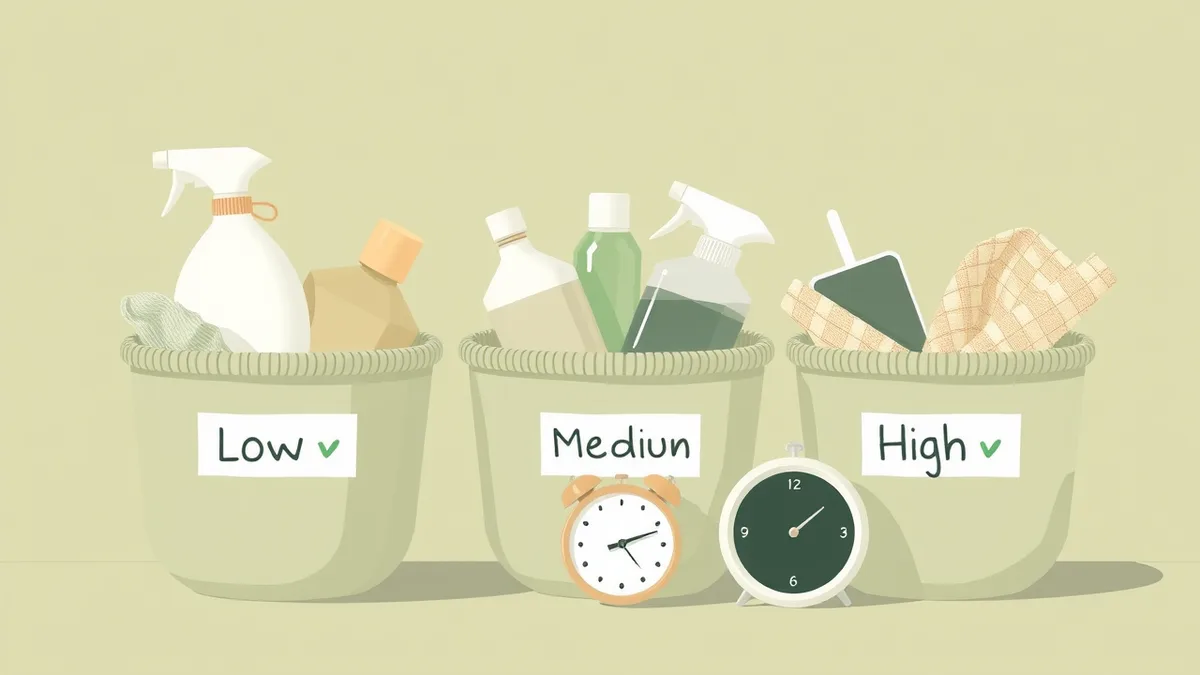
Most schedules assume every day comes with the same fuel in the tank. ADHD energy doesn't work like that. A useful trick is to tag each chore by how much it costs you: low effort (empty the dishwasher, put a wash on), medium (wipe down the bathroom), high (a proper declutter). On a flat day you reach for the low-effort jobs and still make real progress. On a good day you spend the surplus on the heavy ones. Matching the task to the energy you actually have beats forcing a "Tuesday is bathroom day" rule that collapses the first time Tuesday is a write-off.
Decide the order in advance
Decision fatigue is real, and "where do I even start" is one of the most reliable ways to stall. When tasks are already sequenced and prioritised for you, you skip the most expensive part of the whole process: choosing. Rather than facing the entire list and freezing, you want to see the one thing to do next, and nothing else.
Build an ADHD cleaning routine that forgives you
A good ADHD cleaning routine is not a rigid chart you'll abandon after four days. It's a loose, repeatable rhythm with built-in room to fall off and climb back on. The same forgiving mindset applies to ADHD home organisation more broadly: systems that bend rather than break.
- Anchor cleaning to things you already do. "While the kettle boils, I wipe one surface." The existing habit becomes the trigger, so you don't have to summon motivation from nowhere.
- Keep a "reset", not a deep clean. A reset is a short, low-stakes routine that returns a room to neutral. Ten minutes, surfaces cleared, the worst of it dealt with. It's forgiving by design, because it assumes things will drift and simply provides a regular way back.
- Drop the all-or-nothing standard. A bathroom that's "mostly fine" beats one you're avoiding entirely because you don't have the energy to do it "properly".
The aim is a routine that survives a bad week. A system that only works when you're at your best isn't really a system. It's a test you'll eventually fail.
Make starting easier than stopping
Even with the perfect list, ADHD task paralysis can still pin you in place. These are the levers that tend to actually move people from stuck to started.
The "do it for ten minutes" trick
Tell yourself you only have to do the task for ten minutes, and then you're allowed to stop. The trick works because the barrier with ADHD is almost always initiation, not stamina. Once you're moving, momentum often carries you well past the ten minutes. And on the days it doesn't, ten minutes of progress is still progress, with none of the guilt.
Set an actual timer. It does double duty here: it gives time blindness something concrete to push against, and when it goes off you've genuinely succeeded, whether you continue or not.
Body doubling
Body doubling is doing a task in the presence of another person, either physically or over a video call. They don't have to help, or even do the same thing. Their presence provides a gentle external structure that makes it far easier to stay on task. Many people with ADHD find that a chore they'd been avoiding for weeks becomes strangely doable the moment a friend is pottering about in the same room or sitting on the other end of a call.
If you live with others, you can lean into this naturally by tackling chores at the same time rather than in isolation.
Lower the stakes and the friction
- Make the tools visible and to hand. Cleaning supplies hidden in a cupboard are a barrier. A cloth and spray left on the side are an invitation.
- Give clutter a holding pen. When you're moving through a room, "don't put it down, put it in a basket". A single catch-all basket per room stops stray items becoming dozens of tiny floor-level decisions, and you can empty it in one go later rather than agonising over each thing in the moment.
- Turn the boring bits into a game. Race the ten-minute timer, or play "beat yesterday" on how much of the worktop you clear. Pairing a chore with a podcast, a loud playlist, or a phone call works the same way: the task becomes the price of admission to something pleasant.
- Forgive yourself fast. The quicker you let go of a missed day, the quicker you can start again. The shame cycle feeds on the gap between slipping and restarting, so close that gap.
Stop the clutter arriving in the first place
A lot of ADHD tidying is really just managing things that should never have stacked up. Two small habits take pressure off everything else. First, when you do declutter a space, sort fast into three piles, keep, donate, bin, rather than deliberating over each object. Second, notice the impulse-buy loop: clutter often arrives faster than you can clear it, so trimming what comes through the door is quietly one of the most effective "cleaning" tactics there is.
Sharing the load without carrying the mental load
If you live with a partner, family, or housemates, there's a second, quieter weight on top of the chores themselves: the mental load. That's the invisible work of remembering, tracking, and orchestrating everything, and it has a habit of getting trapped in one person's head, where it quietly burns them out. For households where one or more people have ADHD, this can cut both ways, and it helps enormously to get it out into the open.
There's a relationship cost too. When one person carries most of the labour, and reads the gap as carelessness rather than an executive-function difference, resentment builds, and better schedules alone rarely fix it. Naming task initiation as a neurological difference, not a moral failing, tends to defuse far more than another rota does. If you're not sure how the load is currently split in your home, our mental load quiz is a quick, honest way to find out.
Make the work visible to everyone
When household jobs only exist in one person's mind, that person becomes the manager of the home by default, doing the noticing, the reminding, and often the doing as well. A shared system breaks this open. When everyone can see what needs doing and who's on it, responsibility stops being something one person has to chase and starts being something the household holds together.
This matters doubly with ADHD in the picture. Visible, shared tasks remove the need for nagging on one side and reduce the "I genuinely forgot" friction on the other, because the system is doing the remembering for both of you.
Rotate fairly so no one stalls on the same dreaded job
Some chores are universally disliked, and they have a way of landing on the same person every time. Automatic rotation, where a recurring chore cycles round the household in turn, keeps things fair and means nobody is permanently stuck with the task they dread most. It also quietly reduces resentment, which is its own kind of household maintenance.
If you suspect the split in your home has drifted out of balance, the chore fairness calculator can give you a clearer picture, and a simple chore chart generator can help you map out who does what before you set anything up.
For a broader look at sharing chores across a household, our household chore management guide goes deeper on dividing and rotating work.
How OneHaus supports an ADHD-friendly household
OneHaus is a shared household app, and a lot of what it does happens to line up well with the strategies above. To be clear about what it is and isn't: OneHaus doesn't treat or manage ADHD, and it has no ADHD-specific modes. It's simply an organisational tool that makes it easier to externalise memory, reduce decisions, and share the load, which is exactly what many people with ADHD find helpful.
Here's how the pieces fit together:
- Tasks you can break into small steps. Rather than one looming "clean the kitchen", capture the concrete, single steps that make starting easier.
- Recurring tasks. Set a chore to reappear on its own schedule, so the bins, the bedding, and the bathroom no longer depend on you remembering. The job comes back to you instead of you having to chase it.
- Assignment and automatic rotation. Assign tasks to household members, and let disliked chores rotate round-robin so responsibility is shared, visible, and fair.
- Reminders and notifications. Get a nudge before something is due, externalising the internal alarm that doesn't always fire.
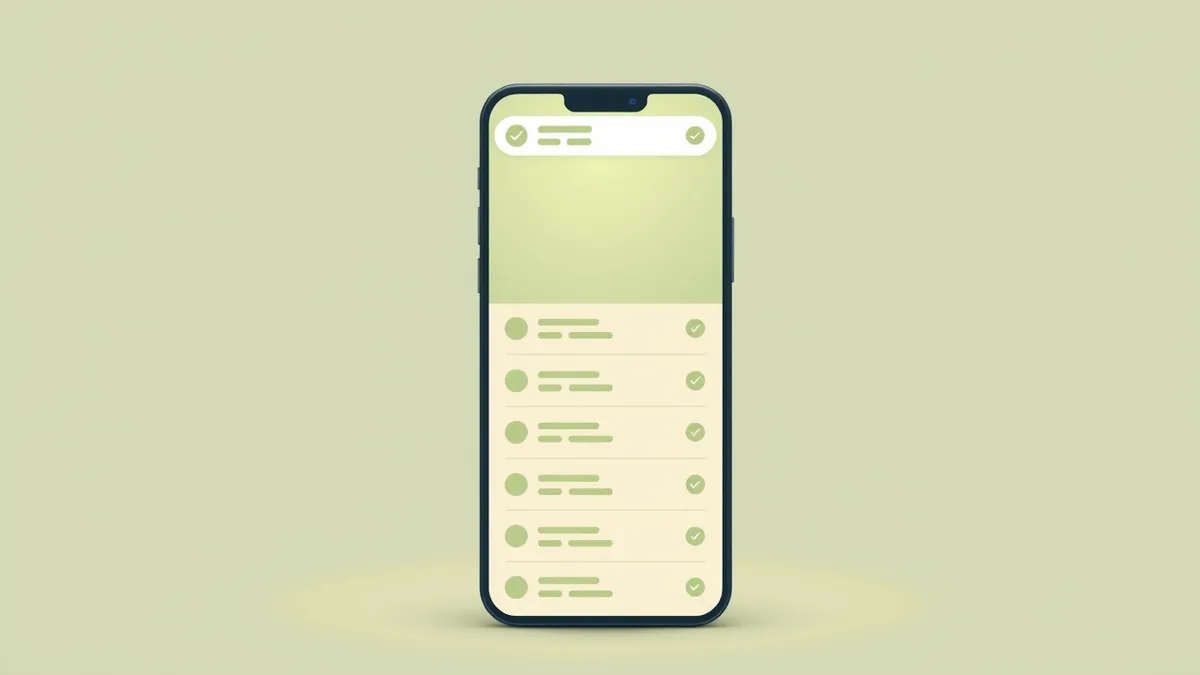
- A Today Panel on the home screen. This is the antidote to "where do I even start". It surfaces the single most important thing right now, working through what's overdue, then what's due today, then today's events, so you're shown the next thing rather than the whole mountain.
- Shared visibility. The whole household sees what needs doing and who's doing it, so the mental load stops living in one person's head.
On OneHaus Pro, you can also capture a task just by typing or speaking naturally to the built-in AI assistant. It's handy for that "get it out of my head before I forget" moment, though it's an optional extra rather than the heart of it. Basic task creation and assignment are free on every plan; recurring tasks, automatic rotation, the calendar, and the AI assistant are part of OneHaus Pro.
Start small. Pick three or four recurring chores, break one of them into steps, and let the Today Panel tell you what's next. OneHaus is available on iPhone, iPad, Apple Watch and Android, so you can start a free 30-day trial and set up your household in a few minutes. One subscription covers everyone you live with.
A gentler way to think about all of this
The biggest shift here isn't any single tactic. It's letting go of the idea that a well-run home should come from discipline, and accepting that for many people it comes from a good system meeting them halfway.
You will still have bad weeks. Things will still slip. The difference is that a forgiving system gives you a way back in that doesn't depend on you suddenly feeling motivated or capable. The next small step is still right in front of you, and the household around you can see it too, so you're not carrying the whole thing alone.
If you'd like a wider toolkit beyond the ADHD lens, our guide on how to be organised covers habit stacking, quick wins, and weekly resets that pair well with everything here. And when you're ready, you can start your free 30-day trial of OneHaus and let your environment do the remembering.
Frequently asked questions
Starting a new system always raises a few questions, especially when previous attempts haven't stuck. Here are some of the ones that come up most often.
Why is it so hard to keep the house clean when I have ADHD?
For many people with ADHD, the difficulty isn't about effort or caring. Housework relies heavily on executive function, the mental skills that handle starting, sequencing, and following through on tasks, and these are often where things slip. A single chore can hide dozens of tiny decisions, time blindness makes "later" stretch out indefinitely, and tasks that aren't visible can drop out of mind entirely. The most reliable way forward is to stop relying on memory and motivation, and instead build systems that make the work visible and break it into small, concrete steps.
What is task paralysis and how do I get past it?
ADHD task paralysis is the experience of knowing exactly what needs doing, sometimes while standing right in front of it, yet being unable to begin. The barrier is initiation, not laziness. The most effective ways through it tend to be shrinking the task to a single concrete step, using the "do it for ten minutes" trick to lower the cost of starting, and body doubling, where simply being in the presence of another person makes the task feel possible.
What does an ADHD-friendly cleaning routine look like?
A forgiving one. Rather than a rigid schedule you'll abandon after a few days, aim for a loose, repeatable rhythm built around short "resets" that return a room to neutral instead of deep cleans. Sort chores by how much energy they take so you can match them to the day, anchor cleaning to things you already do, like wiping a surface while the kettle boils, and drop the all-or-nothing standard. A routine that survives a bad week is far more valuable than a perfect one that only works when you're at your best.
How can a household app help with ADHD and chores?
It can take over the parts that tend to slip. An app can hold your tasks so you don't have to remember them, make chores recur automatically, and send reminders before things are due. Many people with ADHD find that a clear "what to do next" view, like the Today Panel in OneHaus, removes the decision paralysis of facing a whole list. A shared app also makes the work visible to the whole household, so the mental load isn't trapped in one person's head. It supports organisation. It doesn't treat or manage ADHD.
How do I stop the shame cycle when things fall apart?
The shame cycle feeds on the gap between slipping and starting again, so the goal is to close that gap quickly. A forgiving system helps, because it always offers an easy way back in: the next small step is still right there, no motivation required. It also helps to remember that a missed day is feedback, not failure. Reset routines exist precisely because things drift, and climbing back on is built into the design rather than being a sign that you've failed.
How do we share the household load when one of us has ADHD?
Get the work out of one person's head and into a shared, visible system, so nobody has to remember or chase everything. Use automatic rotation so disliked chores cycle fairly rather than always landing on the same person, and let the app do the reminding instead of one of you having to nag. It also helps to treat task initiation as a neurological difference rather than carelessness, which takes a lot of heat out of the conversation. If you want to check how balanced things currently are, the chore fairness calculator and mental load quiz are good places to start a calm, blame-free conversation.
Related guides
- OneHaus for ADHD households: how OneHaus fits into an ADHD-friendly home, in one place.
- A complete guide to household chore management
- The ultimate list of household chores
- How to be organised at home
- Setting up reminders that stick