List of Household Chores: Daily, Weekly & Monthly Jobs
A complete list of household chores split by daily, weekly, monthly and seasonal jobs, plus age-appropriate tasks for kids and a fair way to share the load.
Chores & CleaningA full list of household chores breaks into four buckets. Daily jobs keep the home liveable, weekly jobs keep it clean, monthly jobs catch the things you forget, and seasonal jobs protect the house itself. Below is the complete list, ready to copy into a chart, followed by who can do what by age and a fair way to split the work.
The complete list of household chores by frequency
Start here. These are the concrete tasks most homes need, grouped by how often they come round. Copy the ones that apply to your home and ignore the rest.
Daily chores
- Wash up or load and unload the dishwasher
- Wipe down kitchen counters and the hob
- Clear and wipe the dining table
- Tidy shared rooms and put stray items away
- Make the beds
- Put dirty clothes in the laundry basket
- Take out the kitchen bin when full
- Wipe the bathroom sink and squeegee the shower screen
- Sweep or spot-clean the kitchen floor
- Feed pets and refresh their water
Weekly chores
- Run a full clean of the bathroom: toilet, sink, bath, shower and mirror
- Vacuum carpets and mop hard floors
- Dust shelves, surfaces and skirting boards
- Change bed linen and towels
- Wash, dry, fold and put away laundry
- Clean the inside of the microwave and the hob
- Empty all the bins and take recycling out for collection
- Do the weekly food shop and a meal plan
- Water indoor plants
- Sort the post and deal with any admin
Monthly chores
- Wipe down kitchen cupboard fronts and the fridge interior
- Clean the oven and descale the kettle
- Wash bins inside and out
- Dust light fittings, lampshades and the tops of doors
- Vacuum under beds and sofas
- Check and clean extractor and bathroom fan covers
- Wipe skirting boards and clean internal glass
- Wash the car
Seasonal and yearly chores
- Clear gutters and check the roof
- Mow, weed and tidy the garden in season
- Service the boiler and bleed the radiators
- Test smoke and carbon monoxide alarms
- Change or clean filters in extractors and any HVAC unit
- Deep clean carpets, curtains and the oven
- Wash windows inside and out
- Reorganise wardrobes and the pantry, donating what you no longer use
If you would rather not build this by hand, our chore chart maker turns this exact list into a printable, age-appropriate chart in a couple of minutes.
Household chores by age: what children can do
One of the fastest ways to lighten the load is to share it with the kids. Children can handle far more than most of us expect, as long as the task suits their stage. The ranges below line up with the age-appropriate chore guidance from the American Academy of Pediatrics and the American Academy of Child and Adolescent Psychiatry. Use this as a starting point and adjust for your own family.
| Age | Suitable chores |
|---|---|
| 2 to 3 | Put toys away, drop dirty clothes in the basket, wipe small spills, help make their bed |
| 4 to 5 | Set and clear the table, match socks, put recycling out, water plants, feed pets |
| 6 to 8 | Make their own bed, sweep, dust, sort laundry, empty small bins, bring in the post |
| 9 to 11 | Vacuum, help cook dinner, take the dog out, put away their own laundry, load the dishwasher |
| 12 and over | Clean the bathroom, change bed linen, do a full wash, cook a simple meal, mow the lawn |
A quick word of warning: without a clear system, the most capable child ends up doing most of the work while the younger ones never learn. Assign tasks by name, rotate the bigger jobs, and check them off once a day rather than nagging.
Do not forget the invisible chores
Most chore lists only count the jobs you can see. The harder load is the admin: remembering when the bins go out, booking the dentist, tracking which child needs football kit on Thursday, and noticing when the cleaning supplies run low. This is the mental load, and it usually falls on one person.
Bring these invisible jobs onto the same list as the visible ones. A reminder to book the boiler service is a chore. So is planning the week's meals. This load is rarely shared evenly to start with: in the US, women do roughly 2.2 times as much household and care work as men (Gender Equity Policy Institute, 2024). Once they are written down and assigned, they stop living in one person's head, which is where most household resentment starts.
The rest of this guide groups all of these tasks into ten areas so you can see how they fit together, assign them fairly, and keep them running without constant reminders. One pattern we see again and again in OneHaus households: the chores that get logged as recurring tasks (bin day, the boiler service, changing a filter) are the ones that actually happen on time, while the one-off "I'll remember" jobs are the ones that slip. The ten areas below are built around that, so the predictable work runs itself.
1. Meal planning and grocery shopping
Plan the week's meals, write the matching shopping list, then buy only what is on it. Done properly this is one of the few chores that pays you back: a four-person UK household throws away roughly £1,000 of edible food a year (WRAP, 2022), most of it bought on impulse or in duplicate. A plan kills both.
When the planning is shared, nobody carries the whole job alone. One person can set the core meals while others drop in requests and snacks. Flatmates can split the list into shared staples and personal items so the bill divides itself.
A few things that make it stick:
- Check the fridge, freezer and pantry before you plan, and build meals around what is already there.
- Use themed nights ('Pasta Night', 'Stir-fry Friday') so you decide the format once and only swap the recipe.
- Leave one or two "leftover nights" loose, with versatile staples like eggs, pasta and tinned tomatoes on hand for the weeks that go sideways.
If you want a deeper system for this, see how shared shopping lists bring families together.
2. Laundry management and clothing care
A family of four generates four to six loads of washing a week, and the job has four distinct stages: wash, dry, fold, put away. Most households are fine at the first two and fall down on the last two, which is how the "clean clothes mountain" on the spare bed appears. The fix is to treat folding and putting away as part of the same chore, not a separate one you get to later.
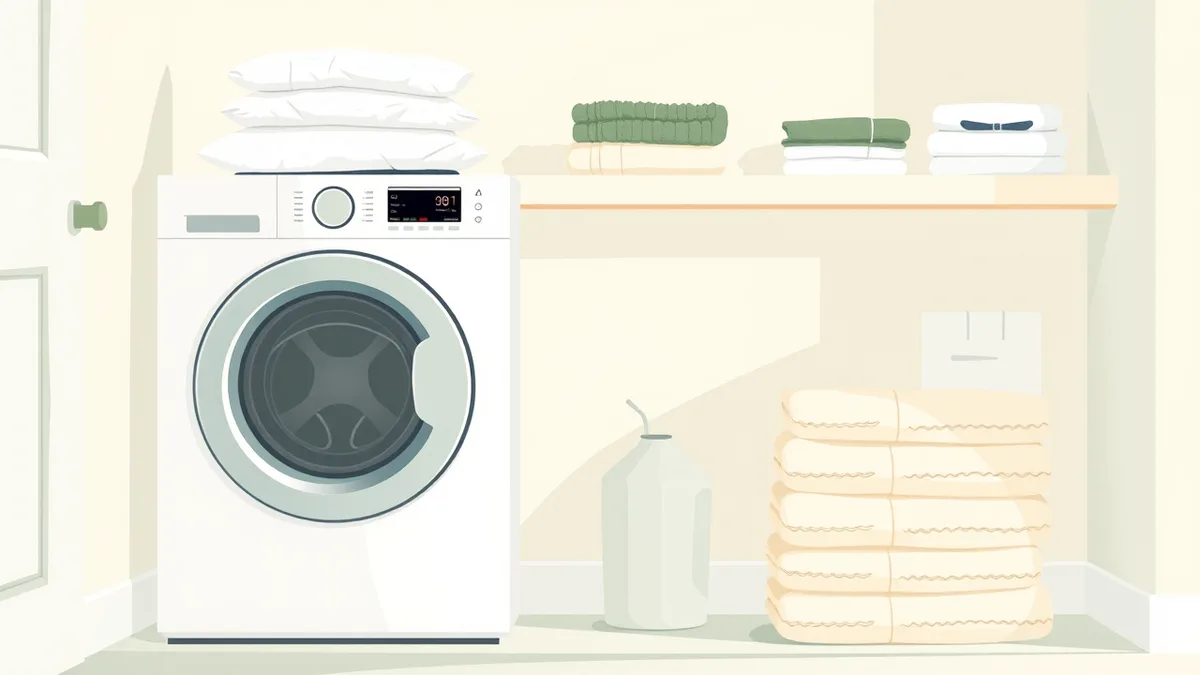
To stop it landing on one person, give each older child their own wash day (parents Monday, the kids Tuesday and Wednesday) so they own the full cycle for their own clothes. Sharers on one machine do better with a booked slot than a vague rota, because the bottleneck is access to the machine, not goodwill.
Keeping the laundry pile under control
The whole job gets easier if you sort at the source. Put out separate hampers for whites, colours and delicates so the sorting happens as clothes come off, not in a frantic pile on wash day. From there, give the week some shape: bedding on Saturdays, towels on Sundays, or one named person per day so the machine is never both jammed and forgotten.
The habit that saves the most grief is folding straight out of the dryer. Clean laundry that sits in a basket creases, and a creased basket is the one nobody empties. Keep one more basket aside for dry-clean-only and hand-wash items so they never get swept into a hot cycle by accident.
3. Kitchen cleaning and dishwashing
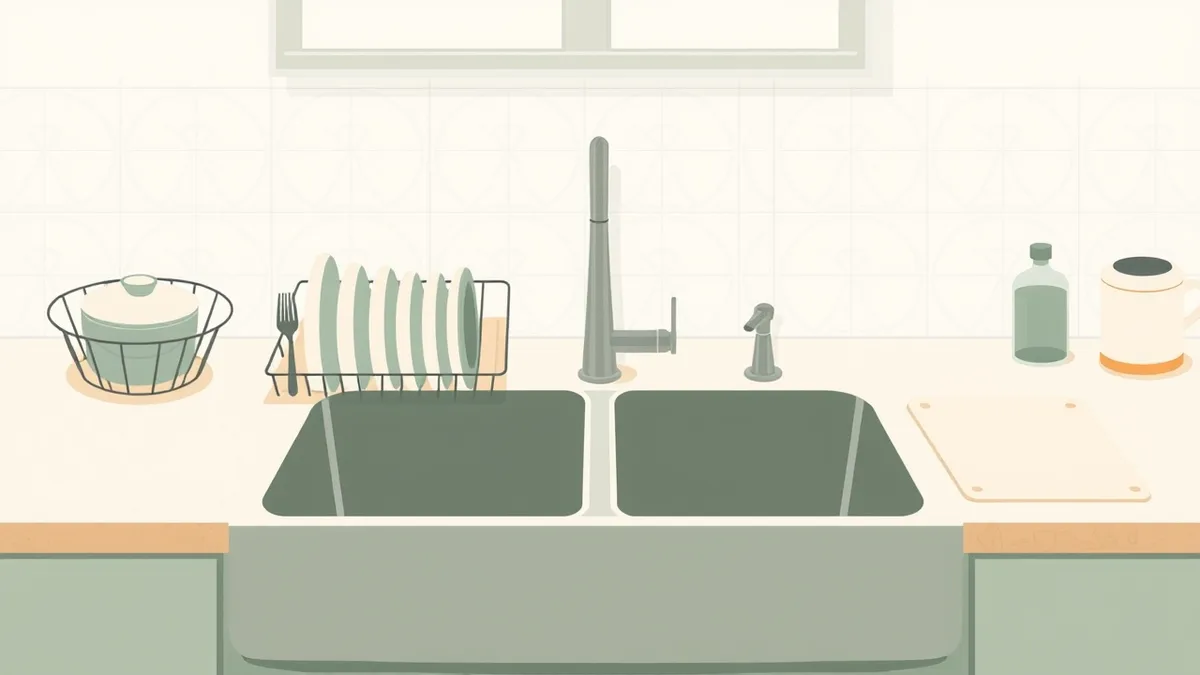
Kitchen cleaning is not just washing dishes. It covers wiping counters, cleaning the hob and managing waste, and it matters for more than appearances. As the Food Standards Agency sets out, cleaning removes harmful bacteria, viruses and parasites from food-preparation areas, so this routine benefits from both immediate attention after meals and a more thorough weekly clean.
The kitchen is the one room where the cook should almost never also be the cleaner. The fairest split we see in shared homes is "whoever cooked, someone else clears," because it stops the same person owning the whole meal end to end. With teenagers, a rotating dinner-cleanup week works better than a per-night rota, since it is one thing to remember rather than a fresh negotiation every evening.
The 15-minute kitchen reset
Most kitchen cleaning is won while you cook, not after. Wipe spills as they happen, wash the odd utensil while a pan simmers, and load the dishwasher as you finish with each thing. Get everyone rinsing plates straight into the dishwasher (or a sink of hot soapy water) so food never has the chance to set hard.
Then end the day with a fixed reset: fifteen minutes to load the last dishes, wipe every surface, sweep the floor and empty the bin. Keep your sprays, cloths and washing-up liquid in a caddy by the sink so none of this needs a hunt for supplies. Wake up to a clear kitchen and the next day starts on the front foot.
4. Bathroom cleaning and sanitation
Cleaning toilets, sinks, mirrors and showers is about more than appearances. In a high-moisture room, regular cleaning and good ventilation keep mould and mildew at bay, and that matters: GOV.UK guidance links damp and mould to respiratory problems and other health effects. So the bathroom earns consistent weekly attention rather than the occasional blitz.
Split it into daily touch-ups and one proper weekly clean. Kids can manage the daily side, wiping the sink after use, while teenagers rotate the bigger weekly clean. With more than one bathroom, hand each to a named person so accountability is obvious. Flatmates with separate bathrooms can simply agree on a shared standard and leave each other to it.
A two-tier bathroom routine
Run a daily five-minute pass (wipe the sink, spray the toilet bowl) to hold a baseline, then a thorough weekly clean for the tub, floor, grout and mirrors. Keep the supplies in a caddy under the sink so the daily pass takes no setup.
The single best move against mould is ventilation, not scrubbing: run the extractor fan during every shower and for twenty minutes after. For the weekly clean, a short fixed checklist (toilet, shower screen, floor, mirror, fan cover) means nothing quietly gets skipped week after week.
5. Floor, vacuuming, dusting, and surface cleaning
Floors and surfaces are easier to manage as one job than three: vacuum the carpets, sweep and mop the hard floors, and dust furniture, shelves and electronics in a single pass. It is not only about looks. Asthma + Lung UK recommends vacuuming weekly and wiping surfaces with a damp cloth at least once a week to cut the dust and house-dust-mite allergens that build up at home, and the routine also extends the life of your floors and furniture.

Dusting is the natural first cleaning job for a younger child, because it is low-stakes and hard to get badly wrong, while the vacuum suits an older one. If you split this room by room rather than by task, each person finishes a whole space and you avoid the half-done feeling of dusted shelves above an unvacuumed floor.
Dust before you vacuum
Order matters here. Always dust first, so anything you knock off shelves, light fittings or ceiling fans lands on the floor ready for the vacuum to lift it. Microfibre cloths trap dust rather than smearing it around, and a can of compressed air clears the crevices in electronics that a cloth can't reach.
To share it out, split the home into zones and give one person each. High-traffic zones like hallways and living rooms may need a second pass mid-week, especially with pets or kids around. If the routine keeps slipping, you can build a custom rota with a cleaning schedule generator so every area gets its turn without a last-minute scramble.
6. Yard work and outdoor maintenance
Outdoor upkeep covers everything from mowing and weeding to seasonal jobs like leaf raking and gutter clearing. These tasks are weather-dependent and eat real time, but skipping them is how you end up with pests, blocked gutters and damage from overgrowth, so they belong on the list even though they don't come round daily.
Splitting the garden by area beats splitting it by task here, because outdoor jobs are seasonal and lumpy: one person takes the front, one takes the back, and each owns whatever that patch needs that month rather than waiting to be told. Lawn mowing is a good first paid-or-pocket-money job for a teenager who can handle the mower safely; watering and deadheading suit younger hands.
Work with the seasons
Outdoor chores follow the calendar, so set reminders against it: spring mulching, summer watering, autumn leaf raking, winter de-icing. Breaking the year into those chunks stops everything landing in one panicked weekend.
Hand out jobs by ability and interest. Heavier work like hedge trimming goes to whoever can manage it; deadheading can be a relaxing weekly job for anyone; genuinely dangerous jobs like tree work are worth paying a professional for. Keep the kit in good order too, because a sharp mower and a strimmer that starts first time make the work faster and safer. And tackle the small stuff often: fifteen minutes of weeding a week heads off the all-day project a neglected bed turns into.
7. Trash and recycling management
The bins are the chore most likely to be forgotten and the most expensive to forget: miss collection day and you live with a fortnight of overflow, because most UK councils now collect general waste every two weeks rather than weekly. The chore is really two: the steady sorting through the week, and the timed sprint of getting the right bin to the kerb on the right night.

Because the deadline is fixed and external, bins reward a named owner over a loose rota: one person checks the collection calendar and puts the right bins out, the same night each week, until it is automatic. The bit families forget to assign is bringing the empties back in, which is how wheelie bins end up blocking the pavement for three days.
Never miss a collection day
Collection days are fixed, which makes them the perfect recurring task: a reminder the evening before means the bins are always out in time, not missed for another week. Because council rules on what goes where vary so much, keep a shared list of what belongs in each bin near your waste station so nobody contaminates the recycling by guessing.
Treat the whole loop as the chore, not just the bit at the kerb: internal bins out, bags replaced, main bins out for collection, then empties brought back in. And add a monthly "refresh the bins" task, a quick wash with soapy water, before they turn into a smell magnet for pests.
8. Appointment and healthcare management
Often overlooked in a standard list of household chores, managing appointments is a critical administrative task that ensures the wellbeing of everyone in the home. This involves coordinating medical, dental, and optical appointments, tracking vaccinations, and handling all health-related logistics. The mental load of this chore is significant, requiring careful calendar management, follow-up, and organisation of important documents.
Count it up for a family of four and it is more than people expect: two dental check-ups each a year, an annual eye test apiece, plus the GP visits, vaccinations and the odd specialist referral, and you are managing roughly twenty fixed appointments a year before anyone is actually ill. Add an ageing parent or a chronic condition and that doubles. The cost of dropping one is not just the rebooking; a missed NHS dental slot can mean a months-long wait for the next.
Keep the appointments in one place
Put every family health appointment in one shared calendar or a household app, so everyone can see what's booked and nobody double-books. Layer reminders on top: one three days before an appointment to confirm it, another a week before a prescription runs out so there's time to reorder.
A lot of this is annual, so set yearly recurring tasks for each person's dental check, eye test and physical and they look after themselves. Keep one secure shared note for the details you scramble for in an emergency too: insurance numbers, GP and provider contacts, and each person's allergies or critical conditions.
9. Home maintenance and repairs
Preventative maintenance is the chore that saves you from the emergency. It's the steady upkeep of your home's systems and appliances, from changing filters to servicing the boiler and fixing small faults before they become big ones. It takes planning, a bit of budget and the occasional professional, but it is what keeps a home running and stops a £50 problem becoming a £5,000 one.
A bit of structure makes it manageable. Track filter changes every three months, budget for the seasonal jobs (spring servicing, autumn heating prep), and keep one shared list of trusted contractors and service records so everyone knows who to call and what's already been done.
A simple maintenance calendar
Set recurring reminders for the small monthly and quarterly checks: leaks under the sinks, smoke alarms, visible wear on anything you rely on. Book the bigger systems in annually, roof, plumbing, electrics and boiler, so a professional catches problems while they're still cheap.
Money is the other half of this. A small dedicated maintenance fund, reviewed once a year against your home's age, keeps a surprise repair from blowing up the rest of the budget. Store the warranties, receipts and service records somewhere shared too, and a home maintenance planner can hold the repair history and costs so you can see what's coming next.
10. School and activity coordination
School admin is the chore that arrives in the most channels: a parents' app, paper letters in the bag, a club WhatsApp group, the teacher's email and a wall planner, all carrying things you cannot afford to miss. The work is less about doing tasks and more about not losing them between those channels, which is why it feels heavier than the time it actually takes.
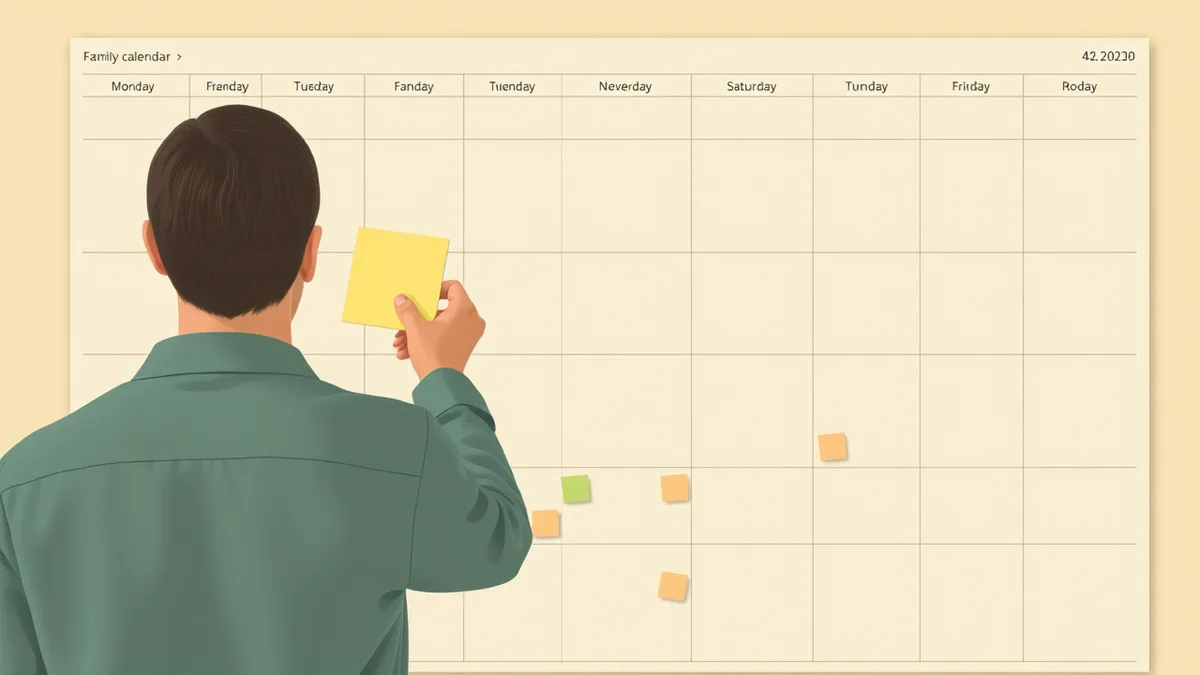
It gets properly hard with more than one child or a packed activity list: three kids across football, dance and piano, each with its own kit and its own communication channel. Couples need to settle who's on pick-up and drop-off each day. It earns its place on the list because these external commitments spill straight into home life.
Get ahead of the week
Pull the school calendars, club websites and individual appointments into one shared family calendar so there's a single source of truth for who's where and when. Then carve out a recurring slot on a Sunday or Monday morning to get ahead: pack the sports kit, find the instruments, check for anything unusual the school has asked for.
The trick with school admin is to capture it the moment it lands. A project deadline or a non-uniform day mentioned in an email goes straight onto the shared list with a reminder, before it's lost in the inbox. Do the same with transport, assigning and tracking the carpool and drop-off rota, so no trip gets to the morning uncovered.
How to split household chores fairly
A list of chores only helps if the work lands fairly. Splitting tasks straight down the middle rarely works, because not all chores take the same time or carry the same mental weight. Here is a more honest approach:
- Split by preference first. Let everyone claim the jobs they mind least. One person may happily cook every night if it means never touching the bathroom. Trading to strengths cuts resentment before it starts.
- Then split by time, not by count. "Five chores each" is not fair if one person's five take twenty minutes and the other's take two hours. Weigh the actual time. Our chore fairness calculator does the maths for you.
- Share the invisible load, not just the visible jobs. Whoever holds the calendar, books the appointments and notices the shopping running low is doing real work. Name those tasks and assign them too.
- Rotate the jobs nobody wants. Cleaning the toilet or emptying the food caddy should move round on a rota so the same person is not stuck with it forever.
- Make the plan visible. A chart on the fridge or a shared app means nobody has to be the one chasing everyone else. The system does the reminding.
Turn your list into a working routine
You now have the full list, the age guide and a fair way to share it. The last step is making it run on its own.
This guide covered ten areas of household work, from daily kitchen clean-ups to seasonal outdoor jobs, plus the admin most lists ignore. The lesson underneath all of it is simple: a list is only as good as the system that keeps it moving. Knowing the bins need emptying is not the same as someone actually doing it on the right day.
That is the gap OneHaus closes. Instead of nagging or relying on memory, you add each recurring chore once, assign it to a person, and let the app send the reminder when it is due. Everyone in the household sees the same shared list on their iPhone, iPad, Apple Watch or Android, so the mental load stops sitting with one person.
To get going:
- Do a quick household audit. Sit down with your family or housemates and run through the daily, weekly, monthly and seasonal lists above. Tick what applies and note what is currently being missed.
- Build your schedule. Turn your list into a printable, age-appropriate chart in minutes with our free chore chart maker, or set the same chores up as shared recurring reminders so they never need re-writing.
- Let the reminders do the chasing. Start a free 30-day OneHaus trial to assign every chore on this list, automate the recurring reminders this guide keeps mentioning, and keep the whole household in sync. One subscription covers everyone under your roof.
Get the system right and a chore list stops being a source of stress. It quietly frees up the time you would rather spend on anything other than wondering whose turn it is to take the bins out.