Organising Your Home: A Calm, Room-by-Room Guide That Lasts
A practical guide to organising your home for good: declutter room by room, build small daily habits, and share the upkeep so the tidy actually lasts.
Productivity & PlanningOrganising your home well comes down to two things most guides skip: build a system for where things live, then build a habit for keeping them there. A one-off declutter feels great for a week and then drifts back, because tidying without a system is just moving mess around. This guide takes you room by room, then covers the upkeep that makes it stick. Here is the shape of it:
- Declutter first, one room at a time, so you are organising less stuff.
- Give everything a home, grouped by how you actually use it.
- Build two or three small daily habits that keep it that way.
- Make the system obvious, so anyone can put things back.
- Share the upkeep so it does not all fall to one person.
Along the way, this guide also covers the roadblocks that trip most households up, from a partner who organises nothing like you do to the paper and digital clutter that never quite gets sorted.
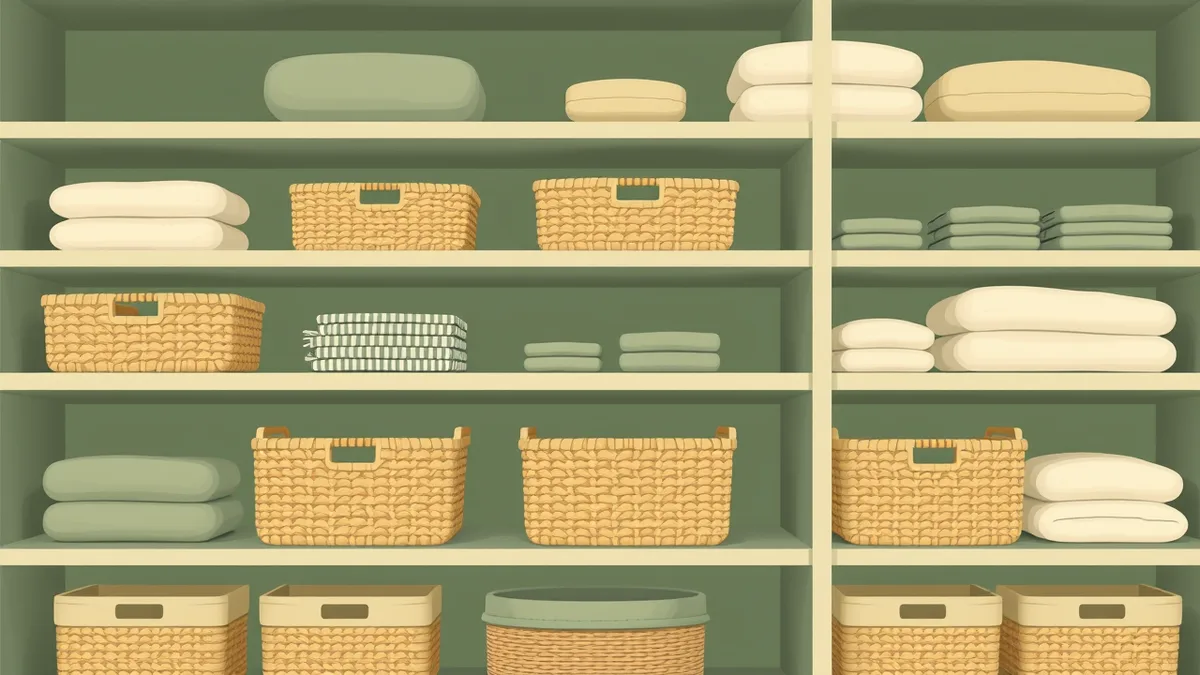
Score a quick win before you declutter
The plan above works, but only if you actually start, and "organise the whole house" is too big a target to begin against. Before you touch the decluttering method below, find one small, high-impact task you can finish in under fifteen minutes.
| Task | Time | Why it helps |
|---|---|---|
| Clear one counter | 10 mins | A calm, usable surface in a high-traffic spot |
| Sort the mail pile | 5 mins | Clears visual clutter and surfaces anything urgent |
| Tidy the entryway | 10 mins | Coming home feels less chaotic straight away |
| Wipe down one appliance | 5 mins | A small clean that brightens the whole kitchen |
Pick one, set a timer, and stop when it goes off. You are not aiming for a transformed home yet, just proof that a small, visible win is possible right now. That proof is what carries you into the room-by-room work below.
Start by decluttering, not tidying
There is no point organising clutter. Before you buy a single storage box, reduce what you own, because every item you keep is something you have to store, clean and tidy forever. Work one room at a time so it never feels overwhelming, and for each thing ask a simple question: have I used this in the last year, and would I replace it if it broke? If both answers are no, it goes.
Do this in short sessions rather than one exhausting weekend. A single drawer or shelf at a time keeps the decisions easy and the momentum up. The goal is not a minimalist showhome, it is owning a bit less so the organising that follows is lighter.
Decluttering methods that work
If the two-question test does not click for you, it helps to know there are several named methods, and the best one is simply the one you will actually finish. Here are the popular ones and who each suits.
- The KonMari method. Marie Kondo's approach: keep only what you use or genuinely love (what "sparks joy"), and declutter by category rather than by room, all your clothes in one go, then all your books, and so on. Seeing every item of a type in one pile makes duplicates and excess obvious. Best for anyone who wants a thorough, do-it-once reset and does not mind a big upheaval before it gets better.
- The four-box method. Take four boxes labelled keep, bin, donate and relocate, and put every item from the space you are working on into one of them. Nothing goes back until it has been sorted. Best for cluttered rooms where things have crept in from all over the house, because the relocate box catches everything that simply lives somewhere else.
- One in, one out. For every new item that comes in, one similar item leaves: a new jumper means an old jumper goes. Best as an ongoing rule once you are tidy, to stop clutter quietly creeping back.
- The 12-12-12 challenge. In one quick session, find 12 things to bin, 12 to donate and 12 to put back where they belong. Best for a fast win when you are short on time or motivation, and a good way to keep momentum between bigger sessions.
- The 20-20 rule. For "just in case" items you are clinging to, ask whether you could replace it for under about twenty pounds and in under twenty minutes if you ever needed it again. If yes, you can usually let it go. Best for the box of maybes that stalls every declutter.
You do not need to pick one and stick to it forever. Many people declutter by category once with KonMari, then keep the place steady with one in, one out. The method is just scaffolding; the decisions are the work.
Give everything a home
The golden rule of an organised home is that everything has a place, and that place makes sense for how you use it. What keeps a home tidy is not cleaning it more often, but making putting things away effortless because there is an obvious spot for each thing.
- Group by use, not by type. Keep the things you use together, stored together: all the baking kit in one place, all the chargers in one drawer, school things by the door.
- Store near the point of use. Tea by the kettle, cleaning spray in the bathroom it cleans, keys where you walk in. The closer the home to where you use it, the more likely it gets put back.
- Keep daily things easy to reach and stash rarely-used items higher up or further back. Prime, easy-access space should go to what you touch every day.
- Contain things in zones. Within a cupboard or drawer, dividers, trays and small boxes stop everything sliding into one heap. A defined slot for each group means a thing has a precise home, not just a vague shelf, and precise homes are the ones that get used.
- Match the container to the contents. Clear boxes for things you need to spot quickly, baskets for soft or bulky items, drawers for what you reach for daily. The easier a home is to use, the more reliably things go back into it.
When everything has a clear home, putting away stops being a decision and becomes a reflex. That is the whole point: a tidy home runs on low friction rather than willpower, where the path of least resistance is the tidy one. This is a core idea in behaviour change too. As James Clear argues in Motivation is Overvalued, Environment Often Matters More, designing your surroundings to make the good behaviour the easy one beats relying on willpower, because every bit of friction you add makes an action more likely to be skipped.
Two habits that keep it that way
Once everything has a home, two small habits do most of the work of keeping it there.
- The two-minute rule. If a task takes less than two minutes (hanging up a coat, rinsing a mug), do it now rather than letting it stack up. This is productivity writer David Allen's rule from Getting Things Done, and most household clutter is a pile of two-minute jobs nobody did. James Clear has his own version for building new habits: scale the habit down to something that takes less than two minutes ("read one page", not "read for an hour"), so starting it is never the hard part.
- Never leave a room empty-handed. When you move between rooms, grab one thing that belongs where you are heading and put it away on the way. Over a day this quietly resets the house without a single dedicated tidying session.
Neither rule needs a chart or an app. They work because they remove the decision: you already know where the thing lives, so you just move it.
Go room by room
Tackling the whole house at once is how organising projects stall. Go one room at a time, finish it, and let the win carry you to the next. Each room below has a couple of concrete storage tactics that do most of the heavy lifting.
- Kitchen: clear the worktops to the things you use daily. Group the cupboards by zone: cooking near the hob, food prep near the board, mugs near the kettle. Drawer dividers turn a jumbled utensil drawer into something you can actually find things in, and a tiered shelf or a lazy Susan in a deep cupboard stops tins and jars disappearing to the back. Decant dry goods into clear, labelled containers so you can see what is running low at a glance.
- Hallway and entrance: this is where clutter lands first. A spot for keys, a place for shoes, hooks for coats and bags, and a tray for post stops the pile building. Hooks by the door are the single highest-value change here, because anything that hangs up never ends up on the floor. A bench with shoe storage underneath, or a basket per person, keeps footwear from sprawling across the hall.
- Bedrooms: clothes you wear easy to reach, out-of-season storage higher up. A clear surface by the bed makes the room feel calm. Use the dead space under the bed with shallow boxes or vacuum bags for spare bedding and off-season clothes, and add drawer dividers so socks, underwear and accessories each get their own lane. In the wardrobe, slim matching hangers and a second rail or hanging shelves nearly double what fits.
- Bathroom: bin the empties, group by person or by use, and keep daily items to hand. Clear labelled boxes or caddies, one per person, stop the cabinet becoming a free-for-all, and vertical storage over the loo or on the back of the door uses space most bathrooms waste. Keep a small bin within reach so empties leave straight away.
- The "everything" drawer or cupboard: every home has one. This is the junk drawer reset: empty it fully onto a surface, bin the rubbish and dead batteries, give the genuine keepers a proper home elsewhere, then use a few small dividers or tins so the handful that genuinely belongs there each has a slot. The drawer stops being a dumping ground once everything in it has an actual job.
- Living room and shared spaces: baskets and a closed storage unit or ottoman absorb the things that drift onto the sofa and coffee table, like remotes, chargers, blankets and toys. Give clutter a lidded home in the room it accumulates in, and a thirty-second tidy actually clears the surfaces instead of just rearranging them.
How long does organising a home take
Honestly, longer than most before-and-after photos suggest, and that is fine. A single drawer is twenty minutes. A small room you can usually do in an afternoon. A whole house, done properly with the decluttering and the systems, is more like a few weekends spread out, not one heroic session.
Expect it to look worse before it looks better. The moment you pull everything out of a cupboard to sort it, the room is a tip, and that is exactly when people give up. Push through to putting the keepers away and the mess resolves. To avoid that wall, work in short sessions of twenty to forty minutes on one defined area, and never start a space you cannot finish before you stop. A finished drawer beats a half-sorted room every time, because the visible win is what pulls you back tomorrow.
Make the system obvious so it lasts
An organised home that only one person understands falls apart the moment they are busy. The systems that survive are the ones anyone in the house can follow without being told.
- Label where it helps. Baskets, shelves and boxes that say what belongs in them mean nobody has to guess, especially children.
- Keep it simple. A system with too many steps gets ignored. The easier it is to put something back, the more reliably it happens.
- Reset little and often. A five-minute tidy each evening keeps a home organised far better than a monthly blitz. Our guide to the Sunday reset builds this into a weekly rhythm.
Share the upkeep
Here is the part that decides whether your newly organised home stays that way: who keeps it up. If maintaining the systems falls to one person, it slowly collapses and resentment builds. Organising is a household project, not a personal one.
A shared approach works far better. When everyone knows where things live and the upkeep jobs are split and visible, the home holds its shape. The trick is to get the where-things-live and the who-does-what out of one person's head and somewhere everyone can see. A shared list of the recurring jobs, with names and days attached, turns "why is it always me?" into a plan the whole house can follow. The pattern holds in almost every home: jobs set up as a recurring reminder get done on the right day, while the one-off "I'll remember" jobs are the ones that quietly slip, because remembering by itself is not a system.
Hold a household kickoff meeting
Before you build any shared system, spend twenty minutes settling three things together. Skip this and you end up arguing about the system later, when one of you is already annoyed.
- List every shared job out loud. Bins, bathroom, meals, the weekly shop, and the invisible ones like booking appointments or noticing the loo roll is low. The list is always longer than either person guessed, and seeing it is half the point.
- Decide what fair looks like in time, not task count. Five quick jobs do not equal five slow ones. Aim for roughly equal time and mental load, not a tidy 50/50 on paper.
- Define "done" for the jobs you argue about most. "The kitchen is clean" means nothing until you agree it means worktops wiped and the dishwasher loaded by bedtime.
Get the kids involved without nagging
Constant nagging is almost always a symptom of unclear expectations. For younger kids, a picture chore chart works better than a spoken reminder. For older kids and teens, put their jobs on the shared family calendar with their name attached, so "feed the dog" is a scheduled task, not Mum or Dad asking again. Connecting chores to a natural consequence agreed in advance, like screen time starting once the day's tasks are ticked off, puts the system in charge rather than the parent.
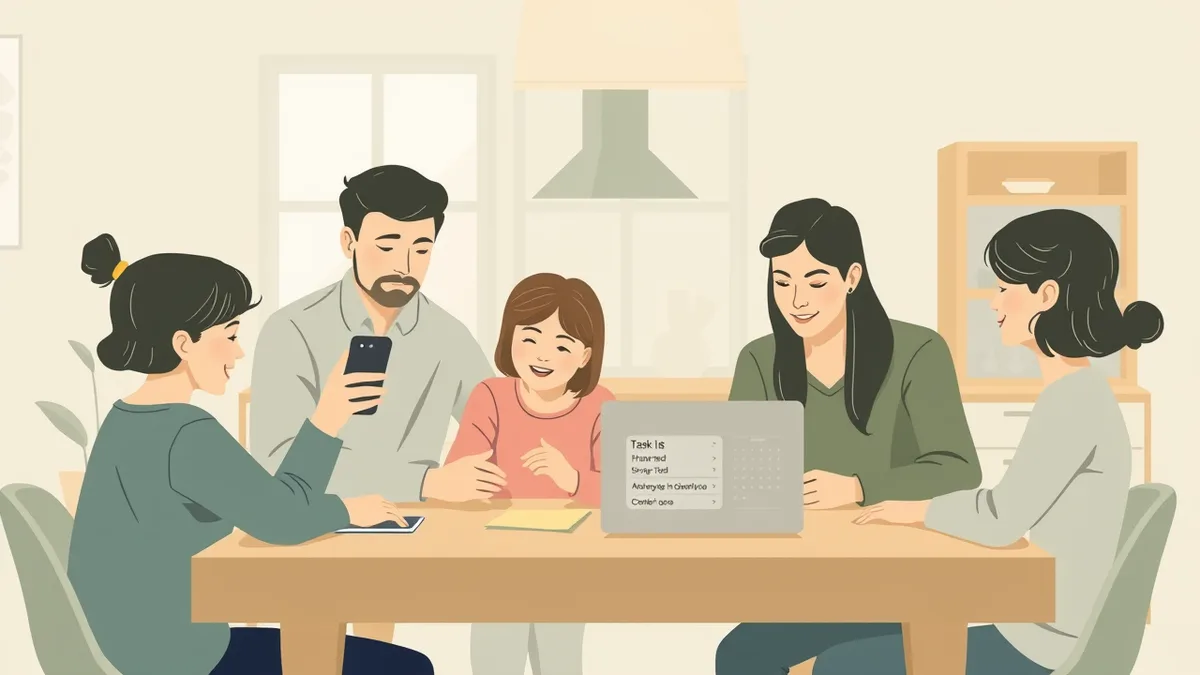
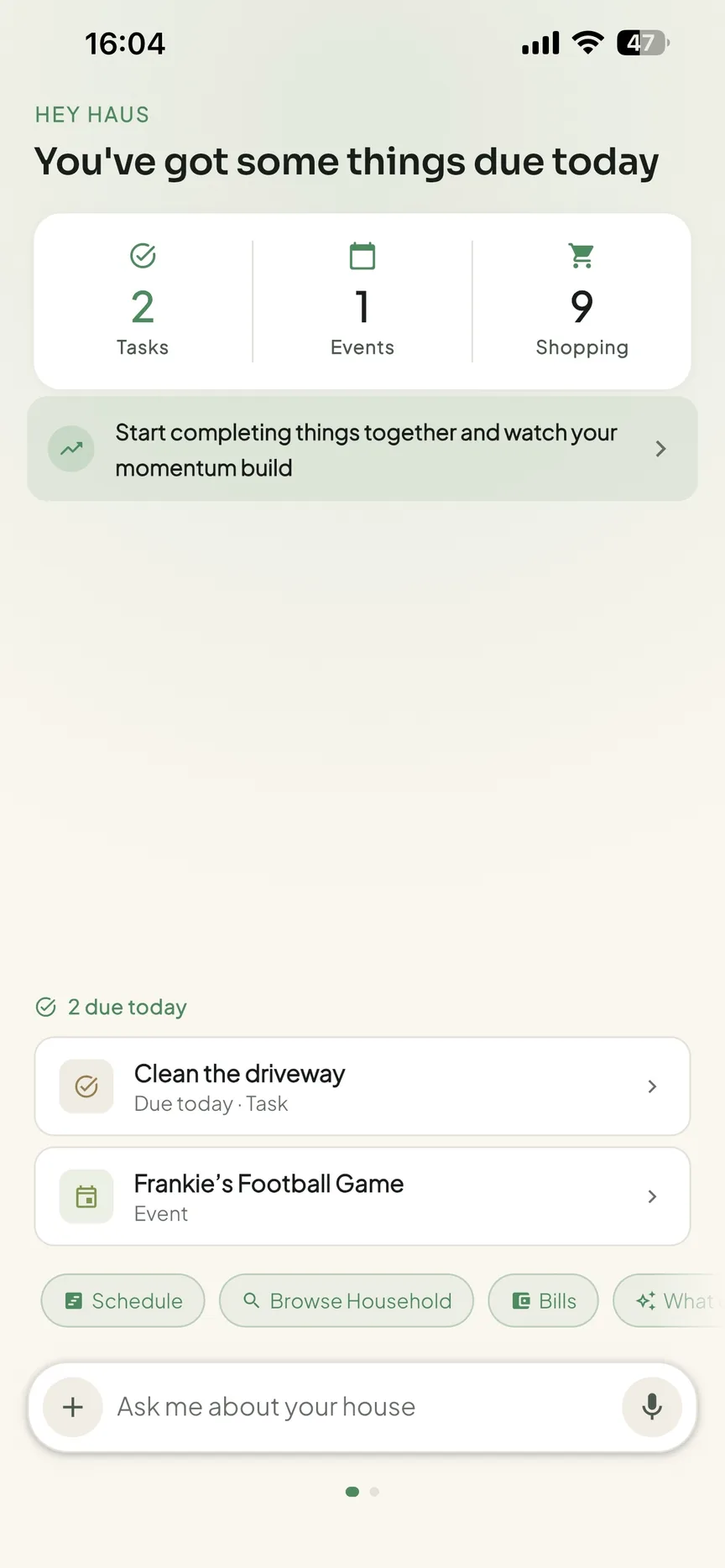
OneHaus keeps the shared tasks, reminders and routines in one place the whole household can see, so the tidy is a team effort rather than one person's endless battle. Set up the bin day, the weekly reset and the put-it-back rules once, and everyone can check what is theirs without being asked. Shared spending works the same way: pick one place to log who bought what, so nobody is quietly keeping score in their head. Start a free 30-day OneHaus trial and keep your organised home organised. See how it keeps a shared household organised between everyone who lives there.
Make it automatic
That initial burst of motivation to get everything in order fades, the way it always does. The fix is making the new habits automatic enough that you barely have to decide to do them.
One of the best ways to wire in a routine is habit stacking: link a new habit to one you already do without fail, so the existing habit becomes the trigger for the new one. In Phillippa Lally's UCL study, published in the European Journal of Social Psychology, it took a median of 66 days (with a wide range) for an action to become automatic, and a missed day here and there did not derail it. So instead of a vague goal like "tidy the kitchen," anchor it: "after I switch on the coffee machine, I wipe down the worktops." The coffee machine is the trigger, and the action becomes far easier to repeat for the weeks it takes to stick.

Marking small wins along the way reinforces the habit and makes you more likely to repeat it. Harvard Business School research on the power of small wins backs this up: making visible progress on meaningful work was the single biggest daily boost to people's mood and motivation. A short weekly check-in, ten minutes to glance at the calendar and ask whether the system still feels manageable, is enough to catch a routine drifting before it collapses entirely. Our Sunday reset guide builds this into a ready-made weekly rhythm.
Common roadblocks, and the fix for each
A system that only works on a good week is not a system. Here are the problems that actually break household organisation, and the fix for each.
My partner and I organise nothing alike
This comes up more than any other complaint. One of you wants a detailed digital plan, the other needs a physical whiteboard or it is "out of sight, out of mind." Forcing one person onto the other's system is the fastest way to make the whole thing collapse. What matters is agreeing on the what, not the how. Keep one single source of truth, a shared app or a digital calendar, where the final deadlines and appointments live, and let the whiteboard person pull their tasks from it. As long as the bins go out on time, who cares how they remembered?
When someone can't pull their weight
A hurdle people rarely plan for is the week when someone simply can't contribute: they're home, but too stressed, exhausted or unwell to do their share. This isn't a rare event, and it's set to become more common. The Health Foundation projects that 9.1 million people in England will be living with a major illness by 2040, around 2.5 million more than in 2019 (figures checked June 2026). This is exactly when shared, visible lists earn their keep: anyone else in the household can see what needs doing at a glance and quietly pick it up, with no stressful last-minute conversation.
Stopping paper before it piles up
Paper is the clutter most homes never quite get on top of. Two habits keep it under control: sort post the second it lands into one of three piles, act on it, file it, or bin it, so junk never makes it past the doormat; and go paperless where you can, switching bills and subscriptions to digital so there is simply less paper coming in to manage.
Taming digital clutter
Clutter doesn't stop at physical stuff. A desktop littered with random files, an inbox with thousands of unread emails, and a phone screen packed with forgotten apps all feed the same overwhelmed feeling. Start your computer with a few broad folders and add sub-folders only as you need them, set a ten-minute timer on your inbox to unsubscribe from anything you never read, and delete phone apps you haven't opened in months.
Frequently asked questions
Where do I start when organising my whole house?
Start by decluttering one room at a time, not by buying storage. Reducing what you own first means you are organising less, which makes everything that follows easier. Pick the room that bothers you most, work through it in short sessions, then give everything that remains a logical home before moving to the next room. Finishing one space builds the momentum to keep going.
How do I keep my home organised long term?
Build systems anyone can follow, then maintain them little and often. Give everything an obvious home near where you use it, label where it helps, and do a short daily reset rather than relying on occasional big clean-ups. Share the upkeep so it does not all fall to one person, because a system only one person maintains will not survive a busy week.
What is the best way to declutter?
Work in short sessions on one small area at a time, and judge each item with two questions: have I used it in the last year, and would I replace it if it broke? If both answers are no, let it go. Short sessions keep the decisions easy and stop you burning out, which is what derails most weekend-long decluttering attempts.
How do I get the family to keep the house tidy?
Make the systems obvious and the upkeep shared. People put things away when there is a clear, easy place to put them, so label storage and keep systems simple enough for children to follow. Then split the maintenance jobs and make them visible on a shared list, so tidying is a household routine everyone owns rather than one person constantly clearing up after everyone else.
Which decluttering method should I use?
Use whichever one you will actually finish. KonMari (declutter by category, keep what you use or love) suits a thorough one-off reset; the four-box method (keep, bin, donate, relocate) suits a cluttered room where things have crept in from everywhere; the 12-12-12 challenge is a quick win when motivation is low; and one in, one out keeps things steady afterwards. They are just different routes to the same decision, so pick the one that fits your time and temperament and start.
How long does it take to organise a whole house?
Plan for a few weekends spread out rather than one marathon. A single drawer is around twenty minutes, a small room is an afternoon, and a full house done properly takes several short sessions across a couple of weeks. The key is to work in twenty to forty minute bursts on one defined area and to finish each space before you stop, because a space always looks worse halfway through and a finished spot is what keeps you going.
How do I get the rest of the household to stick to the system?
Agree on the what, not the how. Set the shared outcome, like "the kitchen is clean before bed" or "the bins go out Tuesday night," and let each person remember their part in whatever way suits them, whether that's a phone reminder or a note on the fridge. Forcing one person onto another's system is the fastest way to make it fail. A short, low-pressure weekly check-in keeps it fair and stops resentment building.