How to Track Your Home Inventory: A Simple UK Guide
Learn how to track your home inventory: what to record, how to capture it fast, and how to set reminders so MOT, warranty, and passport deadlines never slip.
Home & InventoryA home inventory is a single record of what you own, when its dates fall due, and the details you would need to make a claim or a repair call. You do not need to log every mug in the cupboard. Track the things that share one of three traits: a date that matters (MOT, warranty, passport), details you will need under pressure (model and serial numbers, policy numbers), or a cost that ticks over quietly (subscriptions and renewals).
The method is the same for all of them. Record the details once, store any photos and receipts alongside, then set a reminder for the next deadline. That is the whole job. The rest of this guide shows you exactly what to capture and how to keep it from going stale.
The drawer full of paperwork
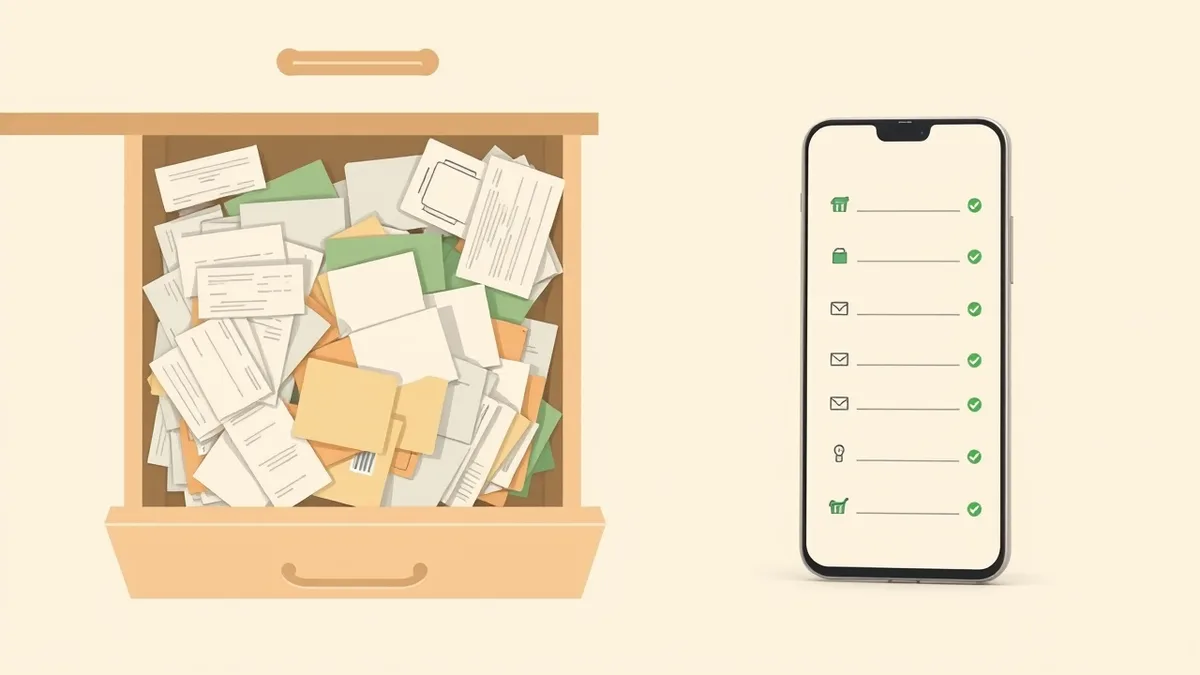
Most households have warranty cards in a kitchen drawer, MOT reminders buried in email, pet insurance details in a folder somewhere, and passport expiry dates stored entirely in someone's memory. The information exists. It is just spread across enough places that finding it when you actually need it takes longer than it should.
A home inventory fixes that by putting the details and the dates in one place, with reminders attached so the next deadline comes to you instead of catching you out.
What to record for each item
For most things, a handful of fields is enough. Capture more for anything valuable or anything you might claim on. A good per-item record covers:
- Name and location so you can find it later (for example "boiler, airing cupboard").
- Brand, model, and serial number for appliances and electronics. On a dishwasher this lives on a sticker inside the door; on a washing machine it is usually around the rim.
- Purchase date and price, plus a photo of the receipt. This sets the warranty clock and proves value if you ever claim.
- Warranty or renewal date, the single most useful field, because it is the one that decides whether the cover is worth anything.
- A contact or policy number for the manufacturer, insurer, or service provider.
- A photo of the item itself, which doubles as proof of ownership and condition.
You do not need exact valuations for everything. Group low-value items by category and quantity, and document higher-value items individually. For jewellery, art, or collectibles, keep any appraisal too, as these often need cover separate from a standard home insurance policy.
What makes an item worth tracking
The items worth tracking fall into three groups. Working through them one at a time keeps the job from feeling endless.
Things with expiry dates
Your washing machine's two-year warranty is only useful if you know when it runs out. The same goes for your boiler service contract, your car's MOT, your passport, and your dog's vaccination certificate. If an item has a date that determines whether it is valid or worthless, it belongs in your inventory.
Warranties are the one people miss most often. The appliance breaks down, the repair runs to a few hundred pounds, and the warranty card turns up in a drawer two weeks later, already expired. Worth knowing too: many manufacturers ask you to register a product soon after purchase to activate the longer guarantee, often within 28 to 90 days. Samsung, for example, gives its extended cover only if you register within 90 days of purchase (checked June 2026). So the date to capture is the purchase date, not just the expiry.
Vehicles carry more recurring deadlines than almost anything else in a household: MOT due date, tax renewal, insurance, and the next service. Missing one can mean fines or a failed inspection, so these are the dates most worth a reminder.
Things with details you need under pressure
Some items you only think about when something goes wrong, and at that moment you will not have time to hunt for the information. Your dishwasher stops draining and you need the brand, model, and serial number to call the manufacturer. That information is on a sticker inside the door, which means pulling out the racks and crouching on the kitchen floor. Recording it once means you never have to do that again.
The same applies to your car's registration number when filing an insurance claim, your pet's microchip number at the vet, or the policy number on your home insurance when you need to make a call. These are details you rarely need, but when you do, you need them fast.
Things that quietly cost you money
Subscriptions and recurring payments accumulate without anyone noticing. The streaming service from a free trial that converted three months ago. The gym membership nobody has used since January. The insurance premium that crept up at renewal because nobody checked.
A forgotten subscription costs the same every month whether you use it or not. Recording your active subscriptions with their renewal dates and costs gives you a clear picture of what you are actually paying for, and a chance to cancel before the next charge lands.
The fastest way to capture it all
You do not have to do this in one sitting, and you do not have to type everything. The quickest start is a walkthrough.

- Film a room-by-room video. Open every cupboard and wardrobe and narrate as you go: what the item is, roughly when you bought it, anything notable. This single video is a strong proof-of-ownership record on its own.
- Start with one contained area. A kitchen-appliance cupboard or the sideboard where the paperwork lives is far less daunting than the whole house. Momentum does the rest.
- Log recent purchases first. Anything bought this year still has its receipt and serial number to hand, so it is the fastest to record properly.
- Add the dates and photos as you go. Snap the serial-number sticker and the receipt rather than copying them out. A photo is faster and more reliable than typing.
Why an inventory beats insurance memory
When all of this lives in one place, you stop relying on memory for dates that matter. A reminder two weeks before your car's MOT is worth more than the MOT certificate itself. A heads-up that your boiler service is coming round means you book it on your terms instead of scrambling when it is overdue.
The list matters most at two moments: when something breaks and you need the details, and when you make an insurance claim. After a burglary, fire, or flood, insurers ask for proof of what you owned and what it was worth. Trying to remember the contents of a room from memory is how people end up under-claiming, and underinsurance is already widespread: 2025 analysis of more than 43,000 UK properties found around 70% were underinsured, covered for only about two thirds of their rebuild cost (RebuildCostASSESSMENT.com). A photo, a purchase date, and a serial number per item turn a stressful claim into a short one.
Keep a copy outside the home too. If the inventory lives only on a laptop and the laptop is what gets stolen or damaged, it cannot help you. Cloud storage or anything that backs up automatically covers that gap.
How OneHaus tracks your home inventory
OneHaus keeps the whole inventory in one place and does the remembering for you. Each type of thing has a home:
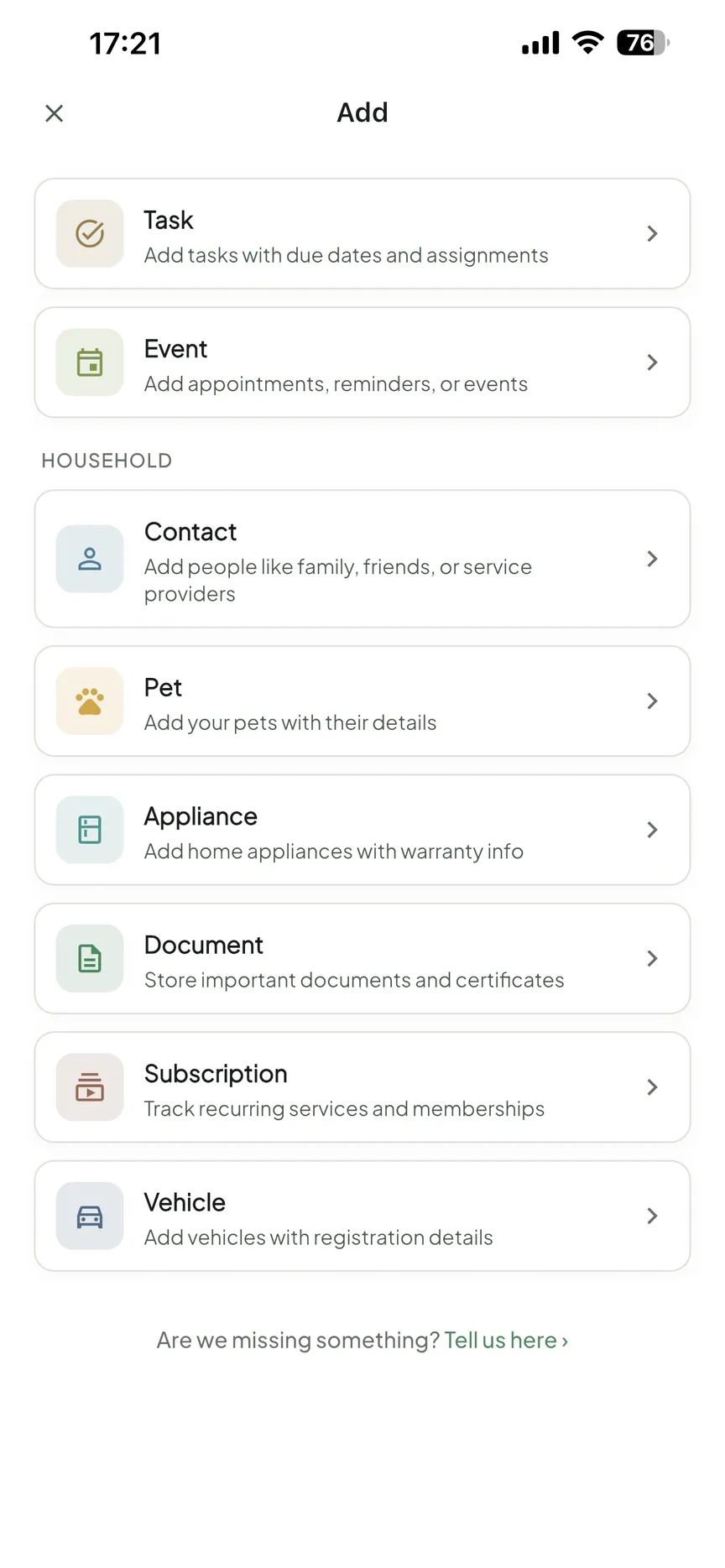
- Appliances with brand, model, serial number, and warranty details.
- Vehicles with MOT, tax, and service dates.
- Documents such as passports and insurance policies, with expiry tracking.
- Subscriptions with status, renewal dates, and monthly cost.
- Pets with microchip numbers and vet details, plus reminders for boosters and checkups.
Renewal reminders cover all of it, so nothing slips past unnoticed. It runs on iPhone, iPad, Apple Watch and Android. The built-in AI assistant helps you fill in details and stay on top of dates.
Start your free 30-day OneHaus trial and set up your first three reminders in a few minutes. One subscription covers everyone in the household.
Getting started today
Pick three things with dates in the next six months: your car's MOT, a warranty that is running out, a passport due for renewal. Record the details, snap a photo of each, and set a reminder. You can build from there. Even a short list means the next deadline will not catch you off guard, and you will have started the proof-of-ownership record that pays off the day you ever need to claim.
Frequently asked questions
What should a home inventory include?
Focus on things that carry a date, details you would need under pressure, or a cost that ticks over. For each item, record a name and location, the brand, model and serial number for appliances and electronics, the purchase date and price with a photo of the receipt, the warranty or renewal date, a contact or policy number, and a photo of the item itself. You do not need to log every mug in the cupboard, just the things that matter when something breaks or you make a claim.
Do I need a home inventory for insurance?
It is not legally required, but it makes a claim far easier and reduces the risk of under-claiming. Around 70% of UK properties are underinsured (RebuildCostASSESSMENT.com), and after a burglary, fire or flood, insurers ask you to prove what you owned and what it was worth. A catalogue with photos, purchase dates and serial numbers turns a stressful claim into a short one. Even a basic list of high-value items is far better than nothing.
What is the fastest way to create a home inventory?
Film a slow room-by-room video, opening cupboards and wardrobes and narrating what each item is and roughly when you bought it. That single video is a strong proof-of-ownership record on its own. Then start with one contained area, log recent purchases first while the receipts are to hand, and snap the serial-number stickers rather than typing them out. You do not have to finish it in one sitting.
How do I keep a home inventory up to date?
Set a reminder for each renewal or expiry date so the next deadline comes to you, and add new purchases as they arrive rather than in a big catch-up. Keeping the inventory somewhere shared, with reminders attached, means it stays current without one person having to police it. Keep a copy outside the home too, so a stolen or damaged laptop does not take the record with it.
Related guides
- Car Maintenance Schedule: What to Track and When (UK Guide) keeps your MOT, road tax, and service dates in order.
- How to Keep Track of Pet Vaccinations and Vet Appointments so you never miss a booster, even with multiple pets.
- OneHaus now adds anything from a photo so an appliance label or receipt becomes an inventory record in seconds.
- How to clean and maintain your appliances so they last helps the appliances you have logged last longer with regular upkeep.
- How OneHaus compares to other household apps shows where a dedicated tracker is the better buy and where one shared system makes more sense.