Weekly Meal Planner: A Simple 15-Minute System That Sticks
A family meal planner you'll actually stick to: plan a week of dinners in 15 minutes, turn it into a shared shopping list, and stop the daily 6pm scramble.
Shopping & GroceriesA weekly meal planner, sometimes called a family meal planner, is a short plan of what your household will eat across the week, built in one sitting and turned straight into a shopping list so dinner stops being a daily 6pm decision. It works best when it is loose, not rigid: plan a handful of dinners, leave a couple of flexible nights, and turn the plan straight into a shopping list so the ingredients are always in. The aim is not a colour-coded spreadsheet, it is to kill the daily "what's for dinner" panic. Here is the 15-minute system:
- Check the week's diary first, so plans match how busy each night is.
- Pick three or four dinners, plus a couple of flexible or leftover nights.
- Build the shopping list straight from those meals.
- Share both the plan and the list so anyone can cook or shop.
The rest of this guide walks through each step and the habits that keep meal planning going past the first enthusiastic week. It is the system I have used to feed my own household for years, refined down to the parts that actually survive a busy week. Plan once, shop once, and the rest of the week runs itself.
Step 1: Look at the week before you plan
The most common meal-planning mistake is planning meals in a vacuum, then discovering Wednesday is a late-work-and-football night with no time to cook. Start by glancing at the week's calendar.
- Mark the busy nights that need something fast or made ahead.
- Mark the relaxed nights where a longer cook is fine.
- Note any nights someone is out, so you are not cooking for people who are not there.
Matching the meal to the night is what makes a plan survive contact with real life. A 40-minute recipe on a frantic Tuesday gets abandoned for a takeaway; a 10-minute one gets cooked.
Step 2: Pick a few meals, not seven
You do not need to plan every single dinner. Aim for three or four fixed meals and leave the rest flexible. A rigid seven-day plan breaks the first time life changes, and then the whole system feels failed.
- Lean on a short rotation. Most households happily eat the same dozen or so dinners on repeat. Keep a list of your reliable favourites and pull from it, rather than starting from a blank page each week.
- Plan one "use it up" night to clear the fridge and cut waste.
- Leave a genuinely flexible night for leftovers, a takeaway or whatever the week throws at you.
This is faster and far more sustainable than trying to design seven perfect meals every Sunday.
Step 3: Turn the plan into a shopping list
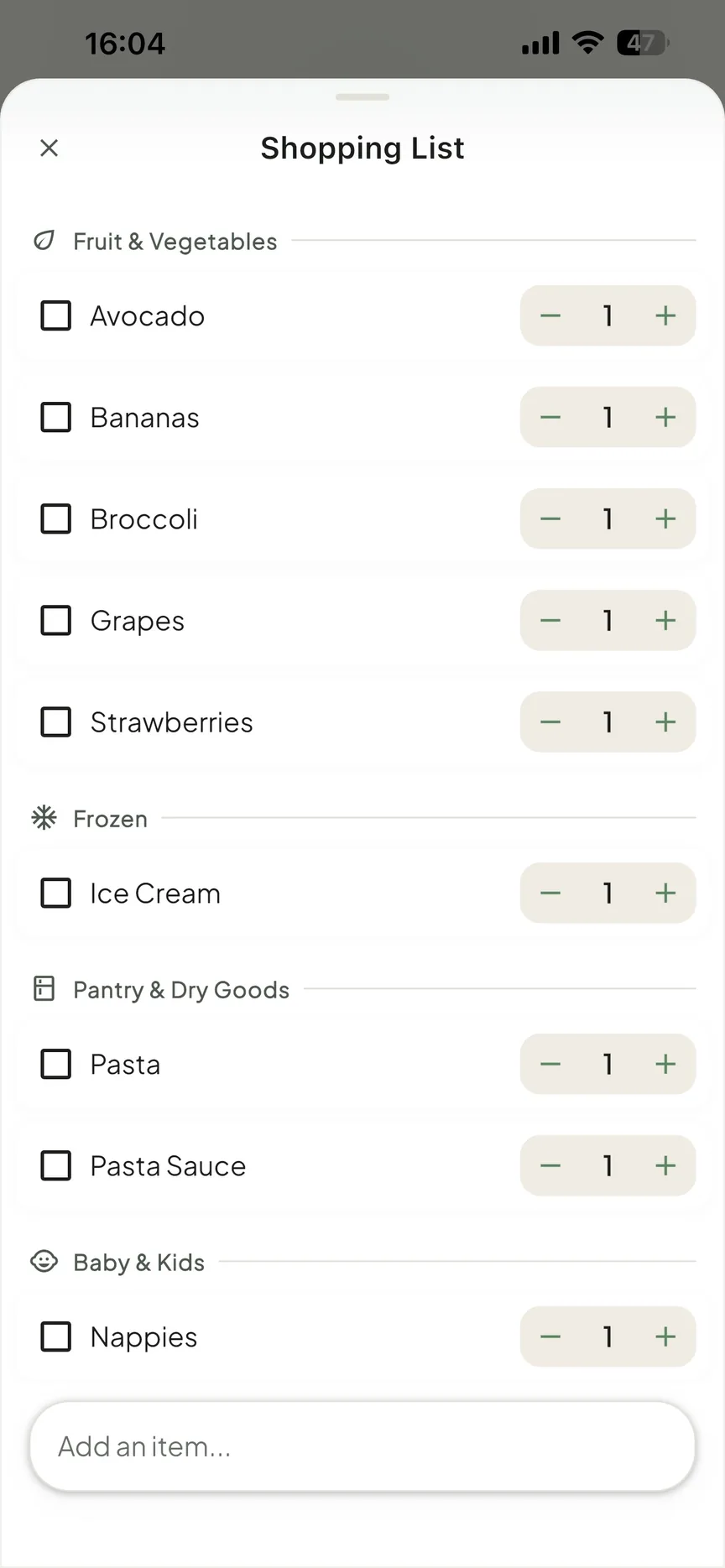
This is the step that saves the most time and money. As you choose each meal, add its ingredients straight to one shopping list, checking what you already have as you go. One plan becomes one shop.
A combined list means one trip or one online order covers the week, which cuts both the number of supermarket runs and the impulse buys that come with them. Our guide to the best shared grocery list apps covers building a list the whole household can add to.
What does an example 7-day meal plan look like?
If a blank week is what stops you, copy this one and adapt it, or build your own from scratch with our free weekly meal planner tool. It is a realistic UK rota of family dinners that leans on cheap, familiar meals, mixes quick weeknight cooks with a longer weekend one, and builds in a use-it-up night to clear the fridge. Swap anything your household will not eat, but the shape is what matters.
| Day | Dinner | Why it works |
|---|---|---|
| Monday | One-pan sausage traybake | Everything on one tray, almost no washing up after a Monday |
| Tuesday | Chicken fajitas | Quick to cook, and everyone builds their own at the table |
| Wednesday | Pasta bake (use-it-up night) | Clears the fridge of half-used veg and odds and ends |
| Thursday | Jacket potatoes with toppings | Hands-off in the oven, cheap, and topping choices keep it interesting |
| Friday | Homemade pizzas | A fakeaway the kids can help build, far cheaper than a delivery |
| Saturday | Curry night | A longer, relaxed cook for when there is more time |
| Sunday | Roast dinner | The big family meal, with leftovers that feed into next week |
To turn this into a shopping list, run down the seven meals one at a time, jot the ingredients each one needs, and check the cupboards as you go so you only buy what is missing. That single pass becomes your whole week's shop. If you need recipe inspiration to fill any night, BBC Good Food has a deep library of family-friendly dinners you can search by ingredient or time.
Notice how the rota matches meals to nights, which is the same principle as Step 1. The fast cooks land on the busy weeknights, the longer ones sit at the weekend, and the use-it-up and fakeaway nights give you slack when the week does not go to plan. If your Tuesdays are hectic, move the fajitas to a quieter night and slot something faster in their place. The plan is a starting template, not a contract.
How do you meal plan on a budget?
A plan is the cheapest cooking tool you own, because nearly every way to save money on food depends on deciding in advance. The savings are real: UK households throw away 4.4 million tonnes of edible food a year, worth around £17 billion, about £1,000 for a four-person home, and WRAP's Love Food Hate Waste campaign rates planning and a shopping list among the most effective ways to cut that bill. A few habits stretch the weekly shop without making dinner feel like a punishment.
- Batch-cook and freeze. Make a double batch of a bolognese, chilli or curry and freeze half. You spend the same effort once and get a second dinner that costs almost nothing on a busy night.
- Buy cheaper cuts and frozen veg. Slow-cooked shoulder, thighs instead of breasts, and a bag of frozen peas or mixed veg cost a fraction of the premium version and work fine in traybakes, curries and bakes.
- Plan around the offers. Glance at what is reduced or on a multi-buy before you finalise the week, then build a meal or two around it rather than paying full price for whatever you had in mind.
- Add a meat-free night. Swapping one dinner for a lentil dahl, a bean chilli or a veg pasta cuts the most expensive item off the bill once a week, and it barely registers as a sacrifice.
- Keep a use-it-up night. A planned night that empties the fridge of half-used veg, leftover rice and the odd sausage stops good food going in the bin, which is money straight back in your pocket.
- Cook once, eat twice. Roast a big chicken on Sunday and the leftovers become Monday's fajitas or a midweek pie. A batch of rice or roast veg does double duty across two meals.
None of this needs a spreadsheet. It needs the plan to exist before you shop, so the cheaper choice is the one already written down. The seven-day rota does exactly this: the pasta bake is the use-it-up night, the homemade pizzas are the Friday fakeaway that undercuts a delivery, and the Sunday roast is the cook-once meal whose leftovers carry into Monday. Layer the budget habits onto a plan you already have and the saving comes for free.
How do theme nights cut decision fatigue?
If even picking which meals to plan feels like work, give each night a loose theme and let it make half the decision for you. You are not committing to the same exact dish every week, just a category, so the question shrinks from "what's for dinner?" to "what kind of taco tonight?"
- Meat-free Monday to ease into the week and trim the budget.
- Taco Tuesday for fajitas, burritos, loaded nachos or a quick chilli.
- Fakeaway Friday for homemade pizzas, a curry or a burger that beats a delivery on price.
Pick two or three themes, not seven. A couple of anchored nights are enough to take most of the weekly thinking off your plate while leaving room to improvise. Themes also make a shared plan easier to follow: anyone in the house knows Friday is fakeaway night, so whoever is home first can start the pizza dough without checking what was decided. Over a few weeks the themes turn into a rhythm the whole household just expects, which is exactly the kind of low-effort habit that keeps meal planning going.
Themes map neatly onto a rota like the one above. Meat-free Monday could be a veg pasta in place of the traybake, Taco Tuesday covers the fajitas, and Fakeaway Friday is already the homemade pizzas. You end up with a plan that is half-decided before you sit down to write it.
How do you build a family meal planner everyone will eat?
Planning for a family adds a few wrinkles a solo plan never hits: fussy eaters, different schedules, and more than one cook. A good family meal planner works around all three rather than fighting them.
- Plan around fussy eaters, not against them. Build-your-own meals do most of the work here. Fajitas, jacket potatoes, homemade pizzas and taco nights let each person assemble their own plate, so one dinner keeps everyone happy without cooking three separate meals. Keep one or two guaranteed crowd-pleasers in the week for the nights nobody can face a negotiation.
- Plan around everyone's week, not just yours. A family calendar rarely lines up: one night is football, another is a late shift, another has someone out entirely. Glance at the whole household's week (Step 1) and match the meal to the night, so the fast cooks land when everyone is rushing and the longer ones sit on the free evenings.
- Split the cooking. A plan that lives in one person's head keeps that person on the hook every night. When the plan is written down and shared, an older child can start the pizza dough, a partner can get the traybake in, and cooking stops being one person's second job.
- Turn the plan into one shared shopping list. As you pick each family dinner, add its ingredients to a single list the whole household can see and add to. Whoever passes the supermarket picks up the shop, and nobody comes home with a third bag of milk. Our guide to the best grocery list apps in 2026 covers the shared-list options in depth.
The point of a family meal planner is not to feed everyone the same thing on the same rigid schedule. It is to take the daily "what's for dinner" negotiation off one person's plate and spread the knowing, the shopping and the cooking across the household.
Step 4: Share the plan and the list
A meal plan stuck in one person's head, or on a notepad only they read, recreates the problem it was meant to solve: that person is still the only one who knows what is for dinner and what to buy. Sharing fixes it.
- Anyone can start dinner. If the plan is visible, whoever is home first can get going without a text exchange.
- Anyone can shop. A shared list means whoever passes the supermarket can pick up what is needed.
- No double-buying. When everyone sees the same list, you stop coming home with three lots of milk.
OneHaus keeps the meal plan, the shopping list and the family calendar together, so the plan you make on Sunday is visible to everyone and the list is in whoever's pocket reaches the shop first. Start a free 30-day OneHaus trial and make "what's for dinner" a question you have already answered. See how OneHaus works for families planning meals and the weekly shop together.
How do you keep meal planning going past week one?
Meal planning fails not because it does not work but because the habit lapses. A few things keep it alive:
- Plan at a fixed time. Tie it to your weekly Sunday reset so it becomes automatic rather than another thing to remember.
- Keep a running favourites list so planning is picking, not inventing.
- Do not aim for perfect. A loose plan you actually follow beats an ambitious one you abandon by Tuesday.
Frequently asked questions
What is a family meal planner?
A family meal planner is a short plan of what your household will eat across the week, built in one sitting and turned straight into a shared shopping list. It works around the realities of feeding a family: fussy eaters, different schedules and more than one cook. The aim is to take the daily "what's for dinner" decision off one person's plate and make the plan, the shopping and the cooking something the whole household can share.
How do I make a family meal plan?
Check the whole household's week first so meals match how busy each night is, then pick three or four dinners rather than trying to plan all seven. Lean on build-your-own meals like fajitas or jacket potatoes that keep fussy eaters happy without cooking separate dishes, leave a couple of flexible nights, and add the ingredients straight to one shared shopping list as you go. Share the finished plan so anyone at home can start dinner and anyone passing the shop can pick up what is needed.
What is the best family meal planner app?
The best family meal planner app keeps the meal plan, the shopping list and the family calendar in one shared place so everyone sees the same week. OneHaus does this: you plan the week's dinners, fill a shared shopping list that sorts itself by aisle, and it all syncs across everyone's iPhone, iPad, Apple Watch or Android device. It comes with a 30-day free trial, then one household subscription covers everyone who lives together. See how meal planning works in OneHaus.
Should I plan all seven dinners?
No, and trying to is why most meal plans fail. Plan three or four fixed meals, add a "use it up" night to clear the fridge, and leave one or two genuinely flexible nights for leftovers or a takeaway. A loose plan bends when life changes; a rigid seven-day one breaks the first time something unexpected comes up.
What is a simple 7-day meal plan for a family?
A reliable week leans on cheap, familiar dinners with one longer weekend cook: a one-pan sausage traybake on Monday, chicken fajitas on Tuesday, a use-it-up pasta bake on Wednesday, jacket potatoes on Thursday, homemade pizzas on Friday, a curry on Saturday and a roast on Sunday. Copy it, swap anything your household will not eat, and run down the seven meals to build one shopping list. Cooking a bigger roast on Sunday also gives you leftovers to fold into next week.
How do I plan meals on a tight budget?
Decide the meals before you shop, because almost every saving depends on planning ahead. Batch-cook and freeze half, choose cheaper cuts and frozen veg, and build a meal or two around whatever is reduced or on offer. Add a meat-free night to drop the most expensive item off the bill once a week, keep a use-it-up night so nothing rots in the fridge, and cook once to eat twice by turning a Sunday roast into the next day's dinner.
Related guides
- Meal planning is now built into OneHaus. Plan the week from your recipes and fill the shopping list in one tap.
- The best grocery list apps in 2026, compared and ranked
- The Sunday reset: a 30-minute weekly household reset