Short Term Household Goals That Actually Stick at Home
Set short term household goals that stick: a plain definition, SMART weekly wins, example goals by category, plus fair, visible tracking for families.
Productivity & PlanningA short-term household goal is a small, time-boxed win you can finish in a day to a few weeks, like "clear one kitchen counter this week" or "save £200 towards a sofa by the end of the month." It is the opposite of a vague ambition such as "get the house organised." Short-term goals are specific, measurable and have a near deadline, which is exactly why they get done while big plans stall.
If your home to-do list keeps growing, the fix is not working harder. It is breaking the big stuff into weekly wins that everyone can see and tick off. This guide gives you a plain framework (SMART), ready-made example goals for families, couples and roommates, and a fair way to split and track the work so it sticks past week one.
Short-term vs long-term household goals
The two work together. A short-term goal is the next concrete step; a long-term goal is the destination it points towards.
- Short-term (this week to this month): clear the entryway, plan five dinners, set up a recycling station, save the first £200 of a holiday fund.
- Long-term (three months to a year or more): a permanently tidy home, a fully funded emergency pot, a finished garden, a redecorated living room.
The trick is to chain short-term wins so each one moves you a step closer to the long-term picture. A holiday fund of £1,500 feels impossible as one number. Broken into "£200 a month for the next eight months," every month is a goal you can actually hit.
Why small wins work for your home

Giant, vague goals like "get the house organised" often lead to paralysis, because staring at a mountain of work is demoralising. Small goals flip that. Finishing a clearly defined task gives you an immediate, visible result, and that sense of completion is what pulls you towards the next one. Researchers call this the "progress principle": in Teresa Amabile and Steven Kramer's analysis of nearly 12,000 daily diary entries, written up in The Power of Small Wins for Harvard Business Review, making visible progress on meaningful work did more to boost mood and motivation during the day than anything else they measured.
That matters even more when you share a home. Whether you run a family home, share a flat with a partner, or live with roommates, small weekly goals create a shared sense of progress. They head off the classic rows that big, stressful projects cause, because everyone can see the steady improvements instead of an endless argument about a job that never seems to end.
Make the work visible and celebrate it. A newly cleared kitchen counter is a daily, physical reminder of a job well done, and that beats a distant, fuzzy idea of a perfect home every time.
What you get from thinking small
A short-term focus does not add to your plate; it makes the work you already have feel less stressful and more rewarding. Procrastination fades first, because a small, well-defined task is far harder to put off than a huge, ambiguous one.
As tasks get ticked off, motivation snowballs and the next goal starts to feel doable rather than daunting. The home itself feels calmer too, since everyone is contributing small, visible improvements instead of arguing over a job that never ends. And the progress is obvious: instead of fighting a losing battle against clutter, you can see measurable wins you're actually proud of.
Example short-term household goals by category
Most guides stop at chores. A short-term household goal can sit in any of these areas, and a balanced home usually has one or two on the go in each. Pick a handful that fit your household this week.
Tidying and home goals
- Spend 15 minutes clearing one shelf in the garage.
- Declutter the coffee table, vacuum the rug and dust the shelves on Saturday morning.
- Set up a recycling station by the back door this week.
- Hang the three pictures that have been leaning against the wall for a month.
Money goals
Small money goals add up faster than they look. UK households throw away around £1,000 of edible food a year (WRAP, 2022), so a single goal like "plan five dinners and shop to the list" can quietly fund the savings target below.
- Agree a budgeting method together, such as the 50/30/20 split: 50% on needs, 30% on wants, 20% on savings or debt.
- Save the first £200 towards a shared goal like a holiday or a new sofa by month end.
- Cancel one subscription nobody uses and redirect it to savings.
- Sit down once this week and split the month's shared bills fairly.
Connection goals
- Eat dinner together two nights this week with phones in another room.
- Hold one screen-free evening where everyone picks an off-screen activity.
- Spend five minutes each day sharing one thing you are each grateful for.
- Write a short list of five household values everyone agrees on and pin it up.
Health and routine goals
- Plan five dinners on Sunday so weeknights run on autopilot.
- Take a 20-minute walk together three times this week.
- Do a 10-minute living-room tidy as a household straight after dinner each night.
The Sunday Three: a simpler cadence that sticks
One pattern stands out in how active OneHaus households actually use shared goals: the ones who keep going rarely set goals ad hoc. They set them on the same day each week, in the same small batch. We call it the Sunday Three.
It's three rules, not a formula to memorise:
The household agrees no more than three shared goals for the week, every Sunday, while the week ahead is still a blank page. Three is small enough that nobody feels buried and large enough to cover one tidy-up, one money or admin job, and one connection goal. Each of the three gets a single named owner, because a goal everyone owns is a goal nobody does. And whatever isn't finished by the next Sunday doesn't roll over silently; it goes back on the table to be re-chosen, shrunk or dropped on purpose. The fixed day matters as much as the number. A standing slot turns goal-setting into a habit in its own right, so you're never relying on someone remembering to start.
How to define a goal that actually sticks
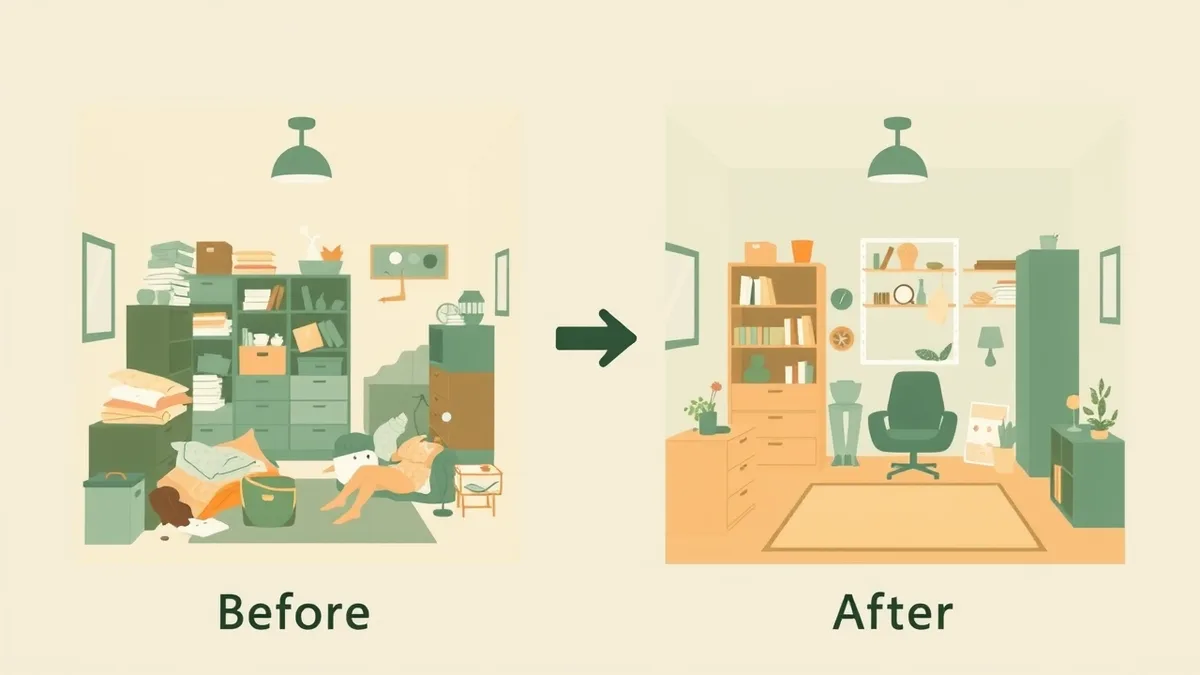
A vague thought like "this place needs a good clean" rarely leads to a sparkling home. For a goal to work in a shared house it needs to be collaborative, realistic and motivating. The simplest test is to make every goal SMART: Specific, Measurable, Achievable, Relevant and Time-bound. The framework traces back to George Doran's 1981 paper in Management Review, "There's a S.M.A.R.T. way to write management's goals and objectives" (summary via MindTools), and has been used in workplaces and households ever since because it turns big ideas into concrete actions everyone can agree on.
Specific and collaborative
Goals that are dictated rather than discussed tend to fail. The most effective household goals come from a shared conversation. Before assigning anything, get everyone together and agree what would make the biggest difference to your space. Then be specific: instead of "clean the living room," say "declutter the coffee table, vacuum the rug and dust the shelves." Deciding together turns a chore into a team project, and ownership is a powerful motivator.
Measurable and time-bound
Vague timelines are where good intentions go to die. "Declutter the spare room" will get put off forever. "Spend one hour on Saturday morning sorting the wardrobe" is measurable (one hour) and time-bound (Saturday morning).
This also works for bigger projects. A family building a new garden bed can break it into a series of weekend wins:
- Weekend 1: Clear weeds from the 2x4 metre patch.
- Weekend 2: Buy three bags of compost and one bag of topsoil.
- Weekend 3: Plant the new flowers by Sunday evening.
Each step is its own short-term goal with a mini-deadline, which keeps the momentum going.
Achievable and relevant
Tie tasks to a feeling you want and they become far more meaningful. "Cleaning the kitchen" is dull; "a calm space where you can enjoy your morning coffee without staring at a pile of dishes" connects everyone to the why. Keep them achievable too. If nobody has free time, "deep clean the entire house" is doomed; "wipe down all kitchen surfaces daily" is realistic.
A couple saving for new living-room furniture is working towards the pride and comfort they will feel in the finished room, not just the money saved by skipping takeaways. That emotional connection keeps willpower topped up when it starts to fade.
Visible and flexible
If you can see the progress, you stay motivated, so keep goals where everyone can watch them tick off. For a deep clean shared between roommates, split it by zone: one person takes the kitchen this week, another the bathroom. The progress is easy to see and the workload feels fair. Build in flexibility too. If it rained all weekend and the garage stayed messy, pivot to a smaller indoor task rather than writing the week off. For more on splitting big jobs into steps, see our guide on how to plan a task effectively.
Prioritising without starting arguments

Once you have a list, the tricky part is deciding what comes first. For you the overgrown garden is the eyesore; for your partner it is the dripping tap. Without a way to prioritise, this turns into a cycle of arguing over who is right. The aim is not for one person to win but to agree a fair order together.
A weekly check-in does the job. It need not be formal: 15 minutes over a cup of tea to glance at the list and agree the plan for the week, so one person's priorities never dominate.
Balance urgent needs with important projects
Some tasks feel more pressing than others, and there is a real difference between urgent and important. Urgent tasks are reactive, like fixing a leaky tap before it causes damage or replacing a dead smoke alarm. Important tasks are proactive, like planning a holiday or decluttering the attic; they improve your life but have no screaming deadline. A household stuck only on urgent tasks lives in "firefighting" mode, which is exhausting. Schedule time for the important, life-enriching jobs too, and you move from maintaining your home to improving it.
Use the effort versus impact method
A quick way to get unstuck is to grade each goal on effort versus impact. It is a gut-check, not a science, and it sorts tasks into four buckets:
- Quick wins (low effort, high impact): hanging that picture, clearing the kitchen counter, setting up a recycling station. Little time, immediate mood boost.
- Major projects (high effort, high impact): renovating a bathroom, landscaping the garden. Hugely rewarding, but break them into smaller steps.
- Fill-ins (low effort, low impact): the junk drawer, the pile of old mail. Nice to do, not the main event.
- Thankless tasks (high effort, low impact): question these. Is there a simpler way? Can it be automated or skipped?
Knock out a couple of quick wins first and the momentum makes the bigger projects far easier to start.
Turning plans into action with clear ownership
A goal without an owner stays a wish, and this is where households stumble. Move past dividing labour by outdated roles or silent assumptions. Delegate by who has the time, the skill or the interest. One person may enjoy organising the finances while another is a natural at planning events; lean into those strengths and the work feels less like a list of demands.
Assigning goals fairly
When deciding who does what, transparency is everything. Start with an open conversation that reframes "who should do this?" as "who is the best person for this right now?" A few methods that work:
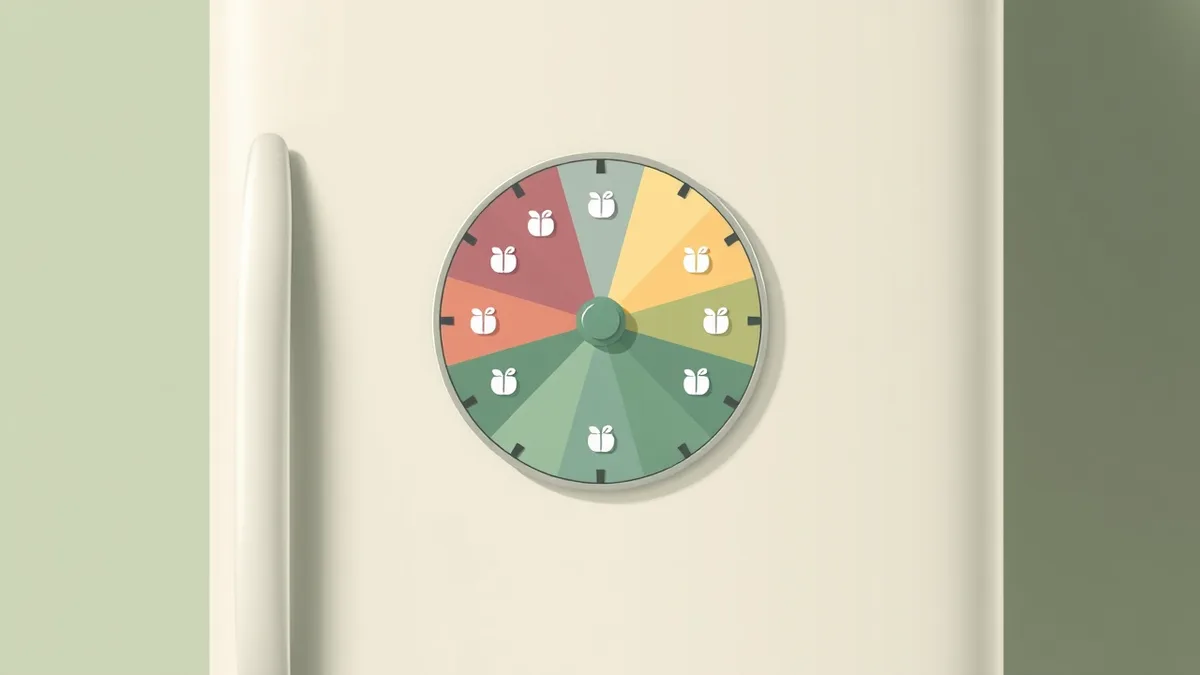
- For roommates: a rotating chore wheel is visual, fair and even a bit fun. Make your own or use a digital chore chart generator to keep it organised.
- For families: designate "project leads." If the goal is a small birthday party, one person owns it and delegates the invitations and cake.
- For couples: a shared digital list for weekly errands ends double-buying and makes sure the dry cleaning and the dozen little to-dos are accounted for.
The power of visual tracking
Once tasks are assigned, track the progress, because out of sight really is out of mind. A whiteboard in the kitchen listing the week's goals and who owns them works wonders: each task gets crossed off for everyone to see, and that small act gives a hit of satisfaction while showing the household you are moving forward together. Done well, tracking is not about micromanaging or assigning blame; it is shared accountability and a way to celebrate wins as a team.
Track your household's goals together in OneHaus
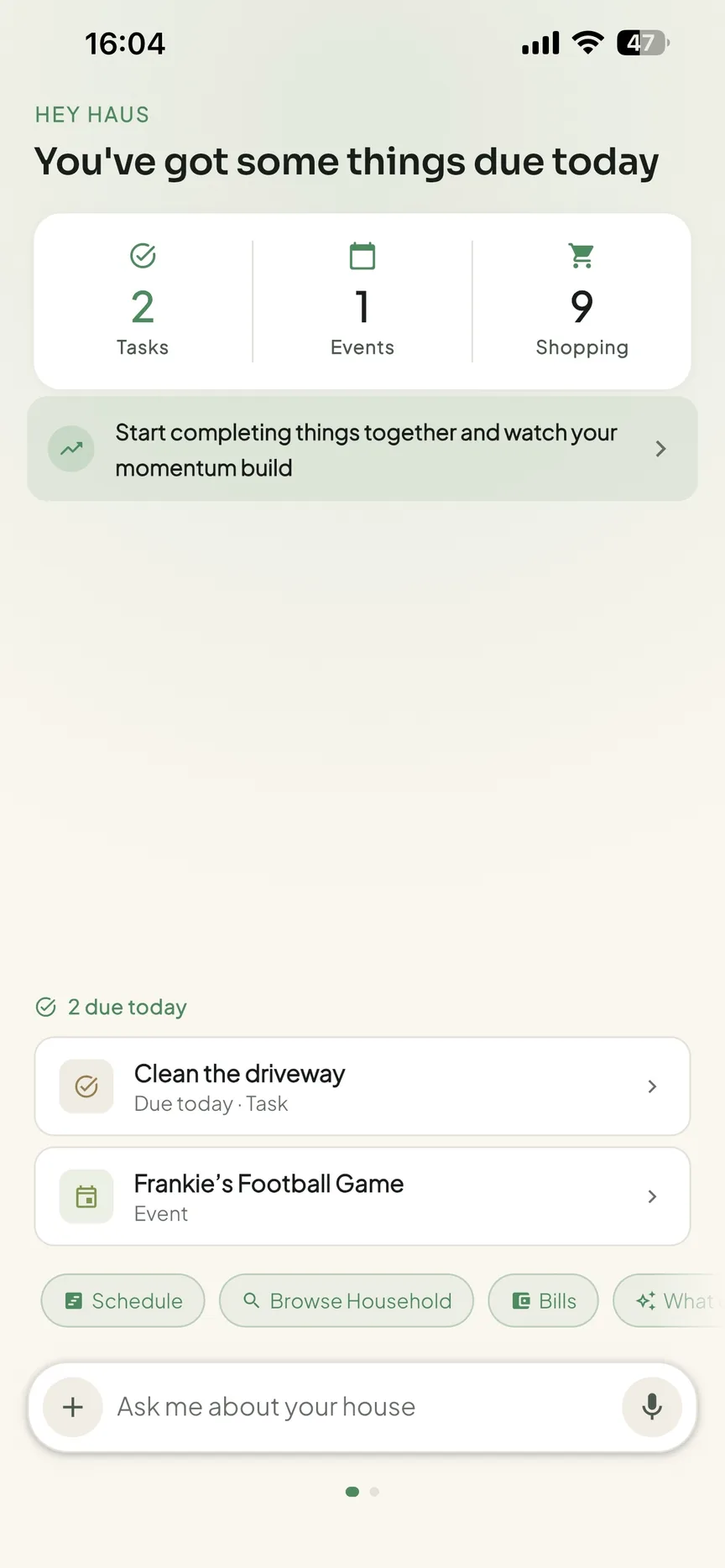
A whiteboard works until someone is out of the house. OneHaus puts your shared weekly goals, tasks and lists in one app the whole household can see from their phone, with owners, due dates and reminders so nothing slips. Everyone gets the same up-to-date view, ticks things off as they go, and sees the week's progress add up. Start a free 30-day trial, and one subscription covers your whole household. OneHaus runs on iPhone, iPad, Apple Watch and Android, so you can set it up today.
Overcoming common hurdles and automating routines
Even a good plan hits a wall. You start with energy, then life gets in the way: motivation dips, a small disagreement throws things off, or one person quietly stops taking part. This happens to everyone. The aim is not a flawless plan from day one but a resilient system that survives the messy, unpredictable bits.
Building sustainable routines
For the jobs that come round every week, planning meals, taking the bins out, the weekend tidy, weave them into your week instead of setting them as fresh goals each time. The simplest method is "habit stacking": attach a new task to something you already do.
- Plan the week's meals while the Saturday coffee brews.
- Make it a house rule that everyone does a 10-minute living-room blitz after dinner.
These small, automatic actions cut the mental effort of getting started, and putting the recurring tasks on autopilot frees up mental bandwidth for the one-off projects that actually improve your home.
Troubleshooting common roadblocks
Routines handle the weekly grind, but bigger problems still surface. Here is how to handle the common ones:
- When motivation fades: go back to your why, a calmer home, more free weekends. Ticking off one or two quick wins is often enough to bring the satisfaction back.
- For a reluctant participant: find out where they are coming from without judgement. Resistance often comes from feeling overwhelmed or unheard. Ask if they will own just one small goal this week to ease back in.
- When disagreements happen: do not ignore it. Acknowledge you see things differently and use a neutral tool like the effort-versus-impact matrix to find common ground. Aim for compromise so things keep moving.
A lot of this comes down to communication and the right tools. Automating reminders and sharing lists removes the nagging; a digital cleaning schedule you can generate and share is a simple place to start. With more of us working flexibly, the home is the centre of daily life, so a well-run household matters as much as a well-run work calendar.
Frequently asked questions
Bringing a new system into your home for managing goals and tasks always raises a few questions. Here are the common ones.
What counts as a short-term goal for a household?
A short-term household goal is anything you can realistically finish in a day to a few weeks, with a clear definition and a near deadline. Think "plan five dinners by Sunday" or "save the first £200 of the holiday fund this month," rather than open-ended ambitions like "get organised." If you can tell exactly when it is done, it is a good short-term goal.
How do I get my partner or roommate on board?
Do not spring a finished plan on them. Open a conversation about a shared frustration, the overflowing recycling, the hallway full of shoes, and frame it as "how can we make this better?" rather than "here is your list of chores." A small shared win, like finally sorting the entryway, is the best way to build momentum and get them invested.
How many goals should we focus on at once?
Aim for 1 to 3 shared short-term goals each week when you are starting out. That keeps the focus tight and makes progress easy to see and celebrate. Once you have a rhythm you might handle a bit more, but always put focus over volume; three finished goals beat ten half-started ones.
It is far better to finish three tasks and feel successful than to list ten and get through a few. Momentum is the real goal, not a long to-do list.
What if we fail to meet a weekly goal?
Treat it as information about the goal, not a verdict on the household. A missed goal usually means it was too ambitious for that week, or an unexpected deadline swallowed the time. At your next check-in, have a quick, blame-free look at what got in the way, then decide whether to break it into smaller steps or move it to a quieter week. A system that bends without breaking is the one that lasts.