How to Stop Procrastinating on Household Tasks: 7 Tactics
Why household jobs are so easy to put off, and seven practical ways to stop procrastinating on chores, admin and the things that never have a deadline.
Productivity & PlanningThe fastest way to stop procrastinating on a household task is to shrink it until starting feels trivial: commit to two minutes, not the whole job. Most household procrastination is not laziness, it is that chores have no deadline, no reward and no one chasing them, so your brain quietly files them under "later". Beat that with a few specific tactics:
- Use the two-minute rule: if it takes under two minutes, do it now.
- Shrink bigger jobs to a tiny first step ("just put one load on").
- Do the task you dread first, before it grows.
- Make the job visible so it stops living only in your head.
- Attach it to a time or a trigger, not a vague intention.
- Share the load so it is not all on one person.
- Let reminders do the chasing instead of your willpower.
The rest of this guide explains why household tasks in particular are so easy to avoid, then works through each tactic. Understand the why and the how stops feeling like another thing to force yourself to do.
Why household tasks are so easy to put off
Work has deadlines, bosses and consequences. Household tasks have none of that, which is exactly why they slide. Three things make chores uniquely procrastination-prone:
- No deadline. Nothing happens if you do not hoover today. The cost is invisible and gradual, so there is never an urgent reason to start now rather than tomorrow.
- No reward. A clean kitchen lasts hours. The work is constant and the win is temporary, which is demoralising and easy to defer.
- Invisible mental load. Half the "task" is remembering it exists: that the bin goes out tonight, that you are low on washing powder. Carrying that list is tiring before you have done anything, so the brain avoids even looking at it.
Once you see that household procrastination is structural, not a character flaw, the fixes get a lot more practical. You are not trying to become more disciplined. You are removing the friction that makes "later" the easy choice.
Why we put things off
If the structural reasons explain why housework is easy to defer, the psychology explains why we defer it even when we know it will only get worse. Here is the part that catches most people out: procrastination is really a way of managing your mood, not your time. Researchers who study it, including Dr Fuschia Sirois and Dr Tim Pychyl, now describe procrastination as a way of regulating difficult emotions rather than a flaw in your scheduling.
Procrastination is really about feelings
When a task feels boring, hard, ambiguous or unpleasant, looking at it produces a small flicker of discomfort. Putting it off makes that discomfort disappear, instantly. That relief is the reward, and it is why the habit is so sticky: you are not avoiding the work, you are avoiding the feeling the work gives you. As the American Psychological Association explains, chronic procrastination is best understood as a failure of emotion regulation rather than a failure of willpower or organisation.
Household tasks are almost designed to trigger this. Cleaning the oven feels grim. Sorting the paperwork drawer feels boring and faintly stressful, because you are not sure what is lurking in there. Cancelling the subscription you no longer use means a tedious phone call. None of these are difficult in the sense of being hard to do. They are difficult in the sense of being unpleasant to feel, so your brain quietly trades a clean oven later for a small hit of relief now. Naming that out loud ("I am not avoiding the oven, I am avoiding feeling bored and a bit grossed out for ten minutes") is oddly effective, because once the feeling is the named obstacle, you can deal with the feeling instead of fighting yourself over the task.
Present bias: why "future you" always gets stuck with it
The second culprit is present bias, the well-documented tendency to over-value the present and steeply discount the future. A reward now feels far larger than the same reward later, and a cost now feels far heavier than a bigger cost later. So your brain runs a lopsided trade: skipping the washing-up tonight is a real, immediate saving, while the consequence (a crusted pan and a worse job tomorrow) lands on "future you", who feels like a different, slightly abstract person you do not mind burdening.
This is exactly why household tasks lose. The cost of putting them off is almost always deferred and gradual: the laundry pile grows a bit, the limescale builds a bit, the admin folder gets a bit fuller. Present bias is brilliant at ignoring slow, distant costs, which is precisely the cost profile of nearly every chore. The fix is to drag the future cost into the present where your brain can actually feel it. A reminder that fires tonight, a visible list that shows the pile growing, or a partner who will see the job is undone, all make "later" cost something now. That is the mechanism behind several of the tactics below, and it is why a system tends to beat sheer resolve.
The perfectionism, procrastination, paralysis loop
The third trap is counter-intuitive: a lot of procrastination comes from caring too much, not too little. If a job has to be done properly or not at all, the bar to start becomes enormous. "I cannot just tidy the spare room, I would need to declutter it properly, sort the boxes, take a load to the charity shop." Faced with that all-or-nothing version, the brain does the sensible thing and starts nothing. Perfectionism quietly inflates the task, the inflated task feels impossible, and the impossibility produces paralysis. Then the paralysis produces guilt, the guilt makes the task feel even heavier, and the loop tightens.
Households are full of these. The wardrobe you will not tackle because you would want to do the whole thing. The family calendar you will not set up because you would have to get it perfect first. The meal plan you avoid because a "proper" one feels like a project. The escape from the loop is to deliberately allow a rubbish first version: a partial tidy, a rough plan, one box sorted. Lowering the standard for starting is not lowering the standard for the result, it is just refusing to let perfect be the reason nothing happens. That is the same instinct behind the two-minute rule, which we will come to next.
Tactic 1: The two-minute rule
If a task takes less than two minutes, do it the moment you notice it. Hang the coat, wipe the spill, put the one plate in the dishwasher. These tiny jobs are what pile up into an overwhelming mess, and none of them are worth the mental energy of remembering to do later. Clearing them on sight keeps the small stuff from ever becoming big stuff.
The rule comes from David Allen's Getting Things Done and was popularised by James Clear, who frames it as a way to make starting almost effortless. As James Clear puts it, the point is not really the two minutes, it is that a tiny version of a habit reliably leads into the larger one once you have begun. "Put one plate in the dishwasher" often turns into emptying the whole thing, because the hard part, starting, is already behind you. Used at home, the two-minute rule does double duty: it clears the trivial jobs on sight, and it acts as a side door into the bigger ones you have been dreading.
Tactic 2: Shrink the task until starting is easy
For bigger jobs, the problem is almost always starting, not doing. "Tidy the whole house" is paralysing. "Put one load of washing on" is not. Pick the smallest possible first step and commit only to that. Almost always, once you have started, finishing feels easier than stopping. The trick is lowering the bar to begin, because momentum does the rest.
Tactic 3: Do the worst job first
There is usually one task you keep stepping around, the one that has been on the mental list for a fortnight. Do that one first, before it grows and before decision fatigue sets in. Getting the dreaded job out of the way early removes the low hum of avoidance that drags on the whole day. Our guide on planning a task helps break a daunting one into a clear first move.
Tactic 4: Make it visible
A task that lives only in your head is a task you will both forget and feel guilty about. Writing it down does two things: it offloads the mental weight of remembering, and it makes the job feel real and finishable. A shared list does this even better, because the work is no longer invisible to everyone else in the house. If you are not sure how much invisible load you are carrying, our mental load quiz is a quick, eye-opening check.
Tactic 5: Attach the task to a time or trigger
"I'll do it later" has no power. "I'll empty the dishwasher while the kettle boils" does. Anchoring a chore to an existing habit (after breakfast, when I get home, before bed) or a set time turns it from a decision you have to make into something that just happens. The fewer decisions involved, the less room for procrastination. A scheduled reminder is the simplest version of this, and our guide on how to set a reminder shows how to set them for the whole household.
Tactic 6: Share the load
A lot of household procrastination is really resentment in disguise. If one person carries every chore, avoidance becomes a quiet protest. Splitting tasks fairly, by effort rather than by counting jobs, makes the whole thing feel less like an unfair burden and more like a shared routine. Our chore fairness calculator shows whether the load is actually balanced, which often explains why one person keeps stalling.
Tactic 7: Let reminders do the chasing
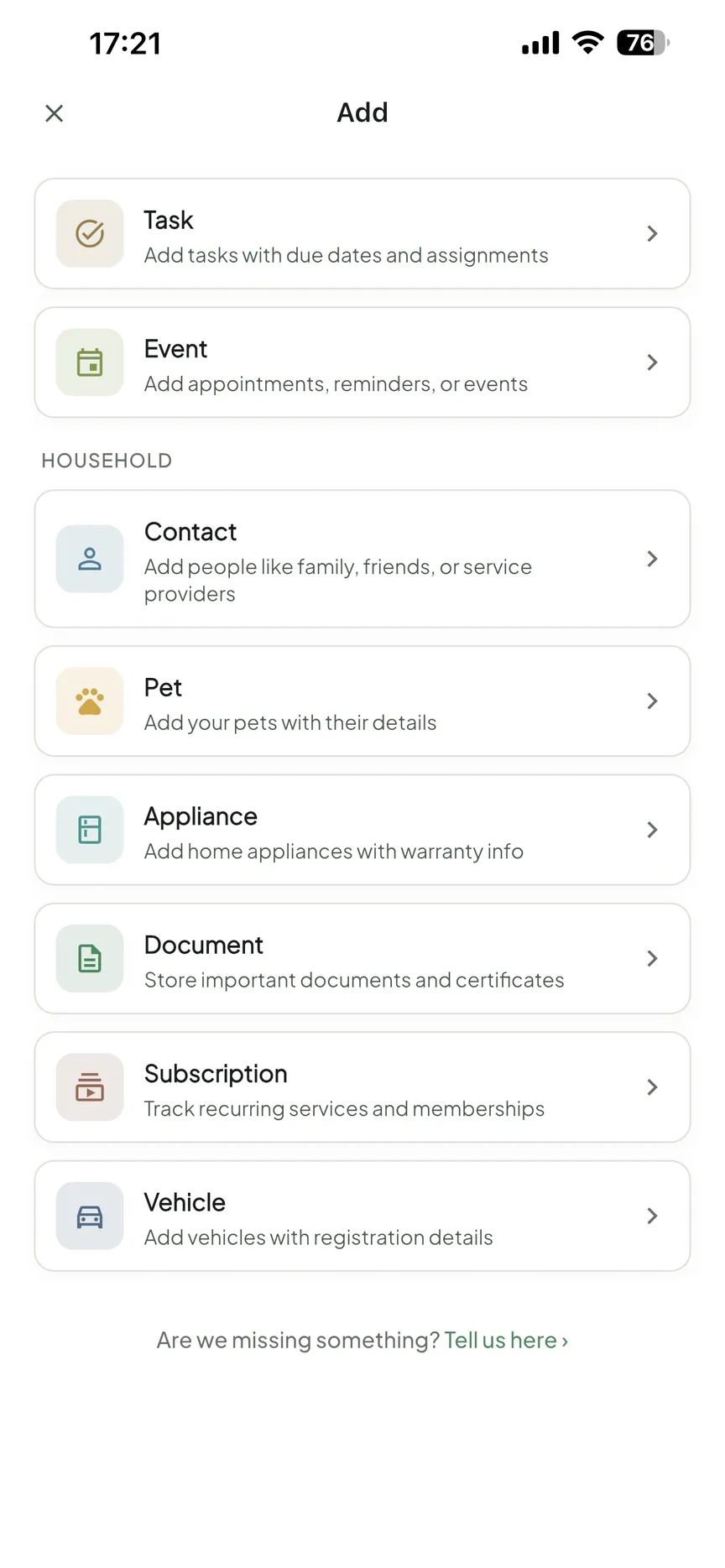
Willpower is a terrible system for remembering chores, because it runs out exactly when you are tired and most likely to defer. A reminder that fires at the right moment, on the right person's phone, removes the need to remember at all. This is where a shared household app earns its place: it holds the list, assigns the jobs, and nudges the right person when each is due, so the chore gets done without anyone having to be the household nag.
That is exactly what OneHaus does, turning the seven tactics above into a system rather than a daily act of self-discipline. Start a free 30-day OneHaus trial and let the app remember, assign and remind, so "later" stops being the default. It is built for shared households where the jobs are easy to leave to someone else.
Frequently asked questions
Why do I procrastinate on housework but not on work?
Because housework lacks the things that force action at work: deadlines, accountability and visible consequences. Nothing bad happens immediately if you skip the hoovering, the reward is short-lived, and remembering the task is itself tiring. It is not a discipline failure, it is that chores are structurally easy to defer. Adding your own deadlines, triggers and reminders replaces the external pressure work has built in.
What is the two-minute rule?
The two-minute rule says that if a task takes less than two minutes, you should do it immediately rather than putting it off. Hanging up a coat, wiping a surface or replying to a quick message all qualify. It works because these tiny tasks cost more in mental tracking than in actual effort, and they are exactly the things that accumulate into overwhelming clutter when left.
How do I stop putting off a task I really dread?
Shrink it and do it first. Commit only to the smallest possible first step rather than the whole job, since starting is the hard part. Tackle it early in the day before avoidance and decision fatigue build up. Making it visible on a list and attaching it to a set time both reduce the friction. Often the dread is worse than the task itself, which becomes obvious once you begin.
Can an app really help with procrastination?
Yes, by removing the two things willpower is worst at: remembering and deciding. A shared household app holds the task list so nothing relies on memory, assigns jobs so responsibility is clear, and sends reminders at the right moment so action does not depend on motivation. It will not do the chore for you, but it removes most of the friction that makes putting it off the easy option.
Is procrastination a sign of laziness?
No. Psychologists now treat procrastination as a way of managing uncomfortable feelings, not a lack of effort or discipline. When a job feels boring, hard or unpleasant, putting it off gives instant relief from that discomfort, which is what makes the habit stick. Plenty of hard-working, conscientious people procrastinate, and often on the very tasks they care most about. Seeing it as a feelings problem rather than a character flaw is what makes it fixable: you deal with the discomfort and the friction, instead of trying to shame yourself into being more disciplined.
Why do I procrastinate more when I want to do a job perfectly?
Because perfectionism inflates the task. If the spare room has to be decluttered properly or not at all, "tidy the spare room" quietly becomes a whole-day project, and your brain responds to that impossible version by starting nothing. The perfectionism feeds procrastination, and the procrastination becomes paralysis. The way out is to allow a deliberately rough first version: a partial tidy, one box sorted, a rough draft of the plan. Lowering the bar to start is not lowering the standard of the result, it just stops perfect from being the reason nothing ever begins.